


Intro
Welcome to the twelfth edition of Nexus Data Labs, where we highlight what matters most in the fast-developing world of onchain finance.
Thank you to George, Joel, Modestus, and J.W. for contributing to this issue.
Setting the Scene
The onchain economy has multiple narratives competing for attention. Tokenized real-world assets are reframing capital efficiency and collateral. Prediction markets are proving real consumer demand. Perpetual futures are building durable user bases.
While the new narratives stack up, one use case has quietly done the work for years: lending. It never depended on a viral moment to sustain itself. Lending maps cleanly to traditional credit markets: borrow against collateral, earn yield on idle assets. Lending survived DeFi summer, the NFT boom, and the memecoin supercycle. Every cycle crowns a new killer app, and lending is still there when the dust settles.
This issue reviews the lending sector through the lens of its leading protocols: Aave, Morpho, and Spark. The focus is on how each is performing now and what the data says about where the sector is heading. The issue closes with the CoinDesk Overnight Rate (CDOR), and how Dune's MCP made it possible to build a rate dashboard in minutes.
Aave
Aave V4 reaches $134M total supplied with new incentives
New incentives launched a few weeks ago have accelerated Aave V4 growth. Around $8K in daily incentives attracted $40M of USDG and frxUSD deposits, which hit new deposit caps of $20M each within days. Growth extends beyond the incentivized stablecoins, with WETH, WBTC, weETH, and wstETH also driving meaningful inflows. Total supplied across V4 markets has tripled from $43M to $134M in the past month.
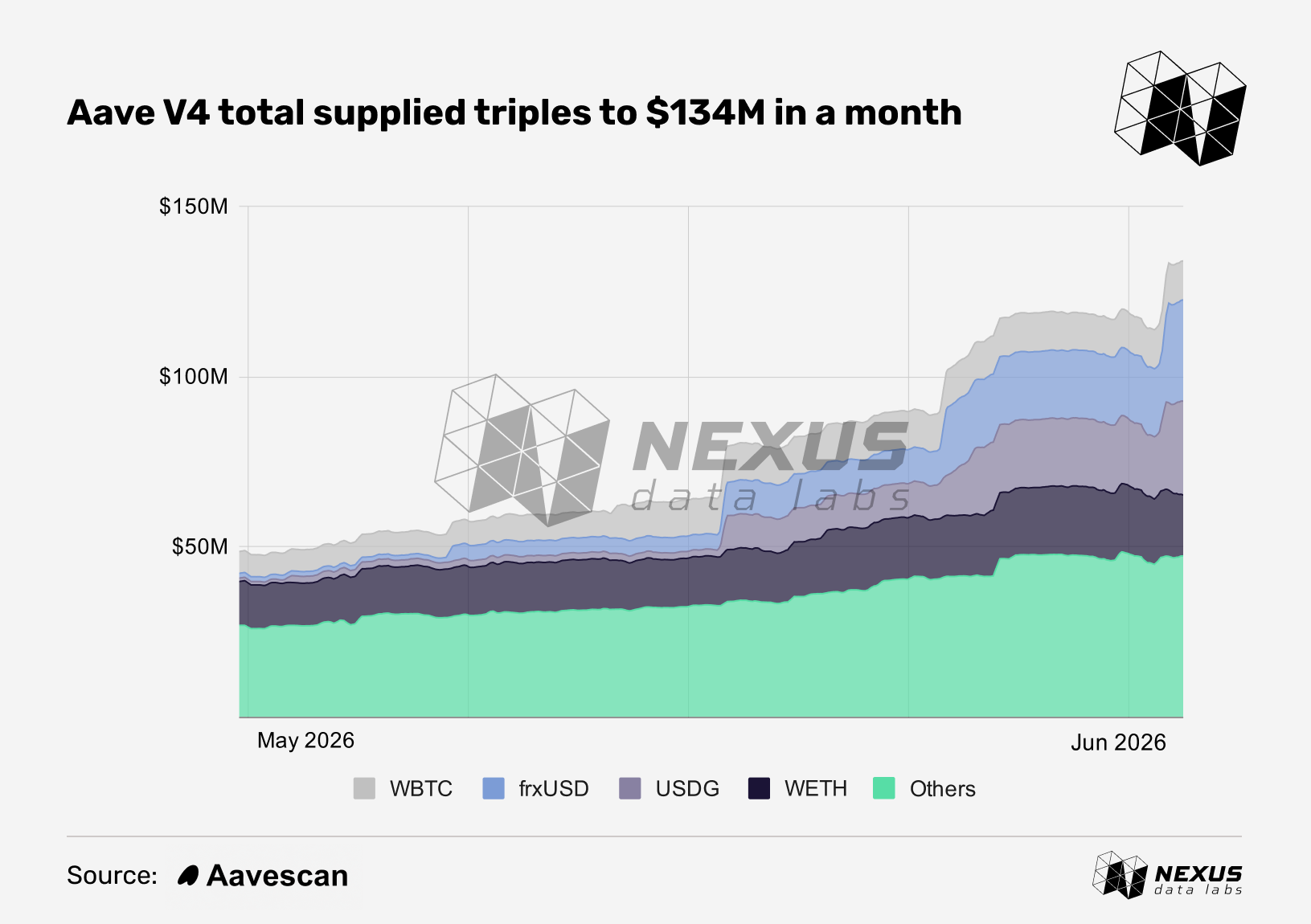
The incentives have placed V4 on a more level footing with other incentivized Aave V3 markets, and the recent inflows indicate that depositors are growing confident in the new V4 codebase. Yields on Aave V4 stand at 7.8% APY for USDG and 6.0% APY for frxUSD.
Morpho
Joel Obafemi | Website | Dashboard
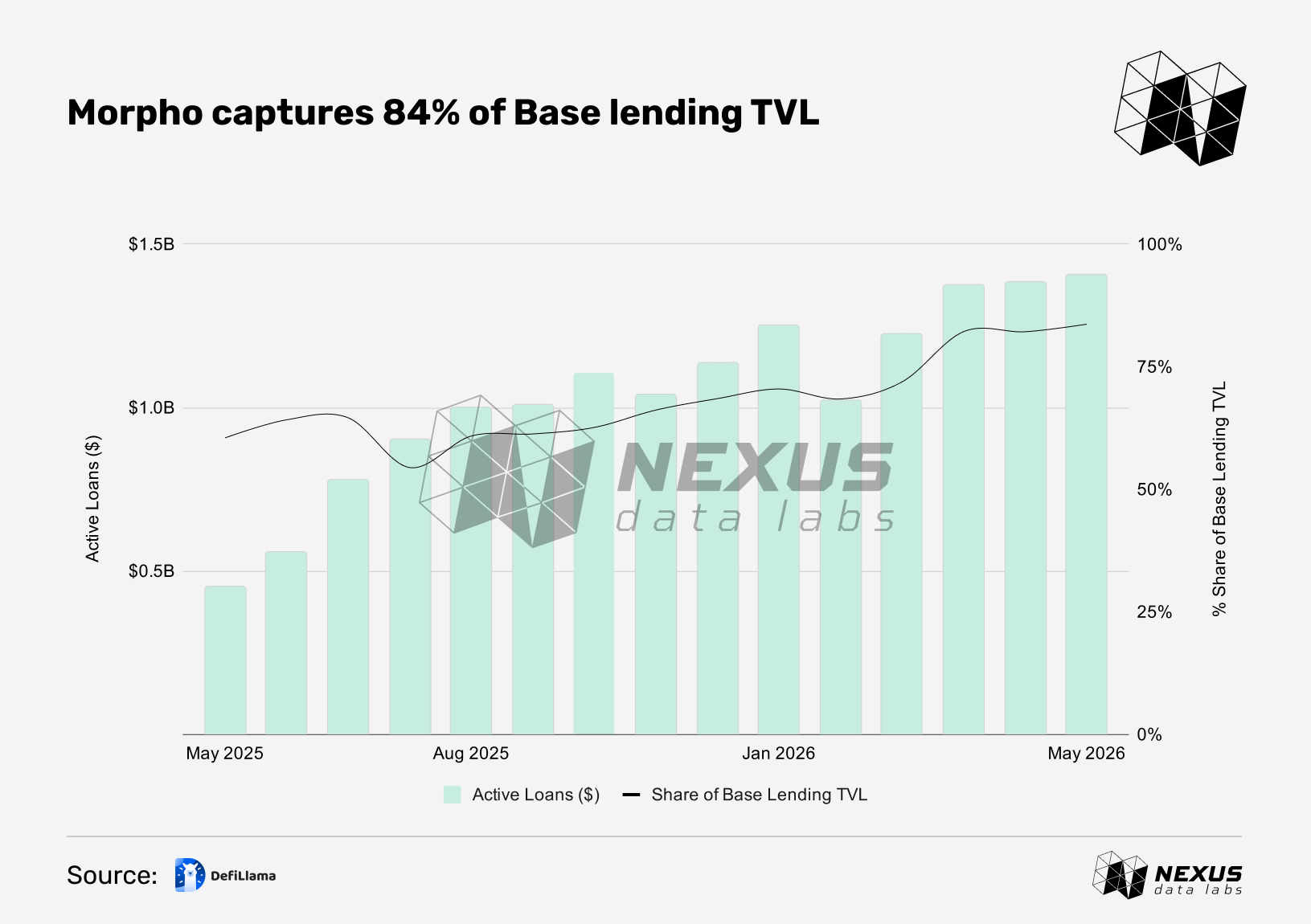
Morpho captures 84% of Base lending TVL via $2.25B of cbBTC
Morpho holds 84% of Base lending TVL, up from 54% twelve months ago. The driver is Coinbase's cbBTC, designed for exactly this flow. $2.25B of cbBTC collateral on Morpho's Base markets backs $1.26B of stablecoin borrows, running at 56% utilization. Coinbase's stack and Morpho's design effectively function as one integrated product.
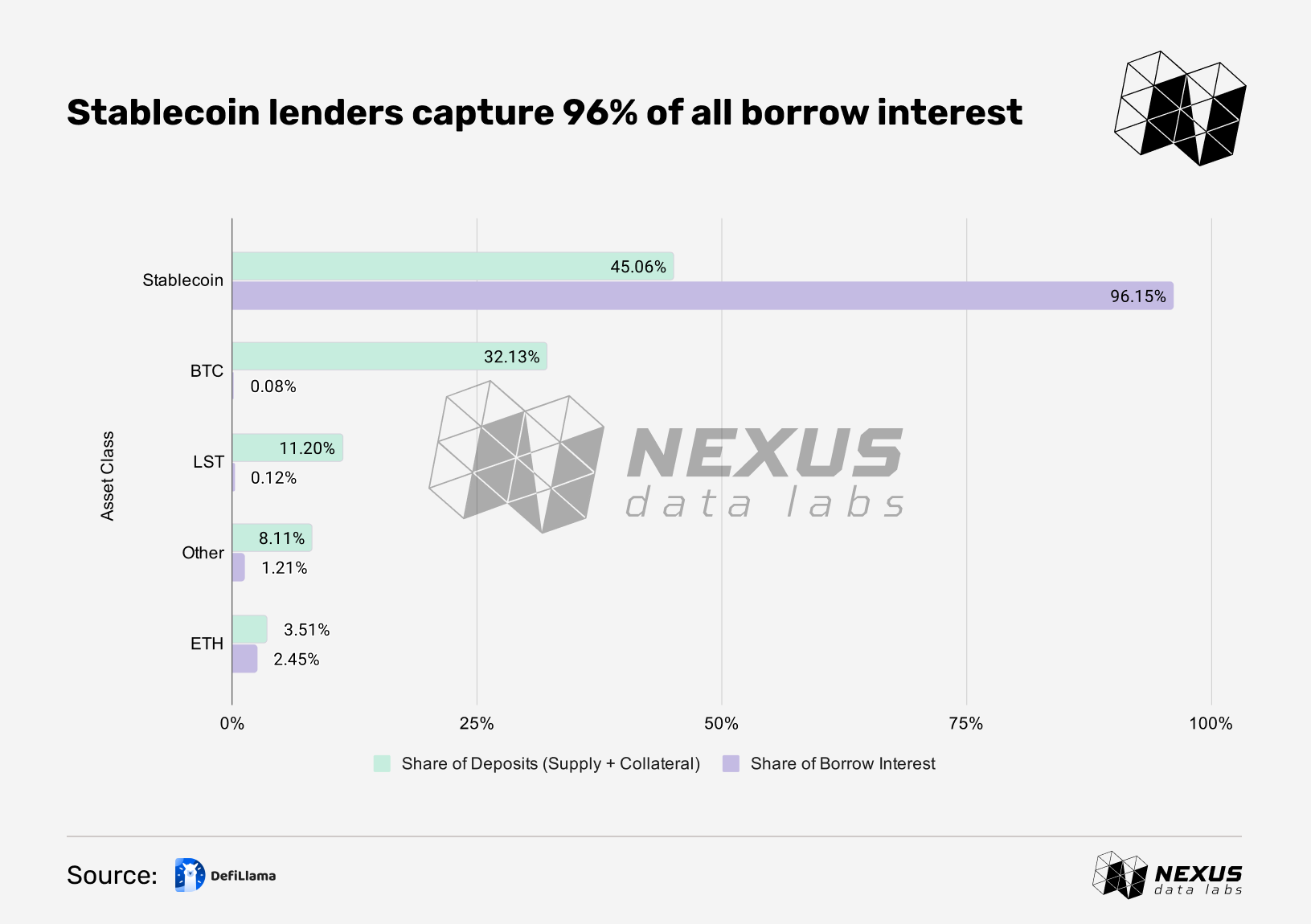
The same pattern holds across Morpho. Stablecoin lenders capture 96% of all borrow interest paid into the protocol, roughly $159M of $166M annualized. That interest is funded by $3.46B of BTC collateral sitting at 56% utilization protocol-wide, earning nothing for depositors because Morpho separates supply and collateral by design. Suppliers earn yield. Collateral holders do not.
Spark
Modestus Okoye | Website | Dashboard
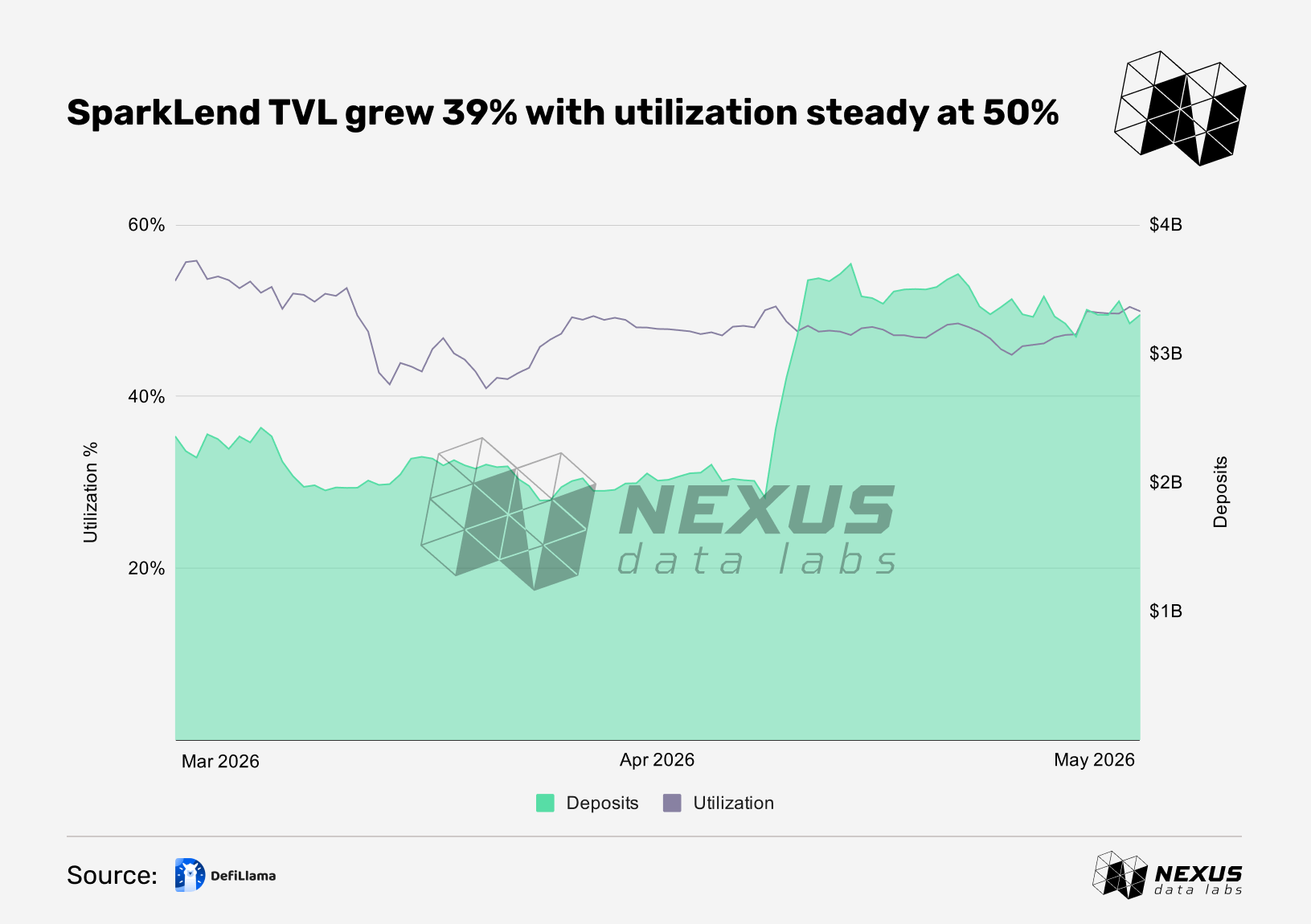
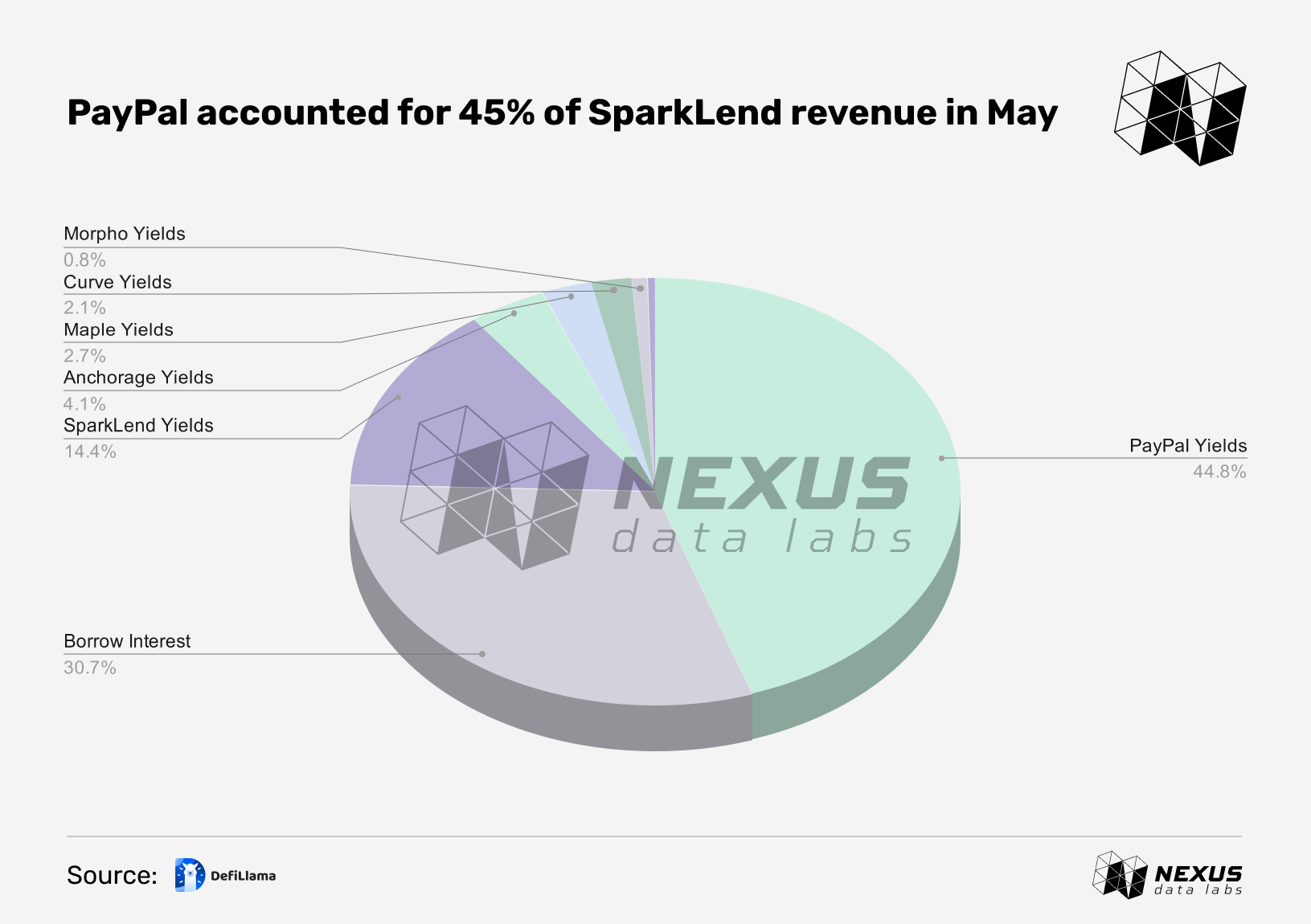
SparkLend TVL grew 39%, but borrowers now fund only 31% of revenue
SparkLend is Sky’s lending market for DAI and USDS borrowing, but recent data shows a model growing less dependent on borrower demand. Over the last 90 days, TVL climbed 39%, from $2.38B to $3.31B, while utilization sits at 50%, down from a 64% peak in April 2025. That gap points to deposits outpacing borrower demand. For comparison, Fluid holds 99.6% utilization, Maple 94.3%, and Aave V3 78.1%.
The income statement makes the shift clearer. In May 2026, SparkLend earned more from a single PayPal yield account (44.8% of gross revenue) than from all borrower interest combined (30.7%). External yield deployments accounted for 68.6% of gross revenue. While Spark still presents as a lending market on the surface, its economics are now driven more by capital deployment than borrower demand.
CoinDesk Overnight Rate (CDOR)
The CDOR dashboard, built in one prompt
CDOR (CoinDesk Overnight Rate) is a daily benchmark interest rate series created by CoinDesk, built from activity in Aave's stablecoin lending pools. It converts the interest borrowers pay onchain into a standardized overnight rate. Because Aave's rates adjust dynamically with pool supply and demand, CDOR tracks how borrowers and lenders behave in real time. It is designed as DeFi's version of money-market benchmarks like SOFR, providing a foundation for interest rate derivatives and other rate-based products, but built purely from onchain activity.
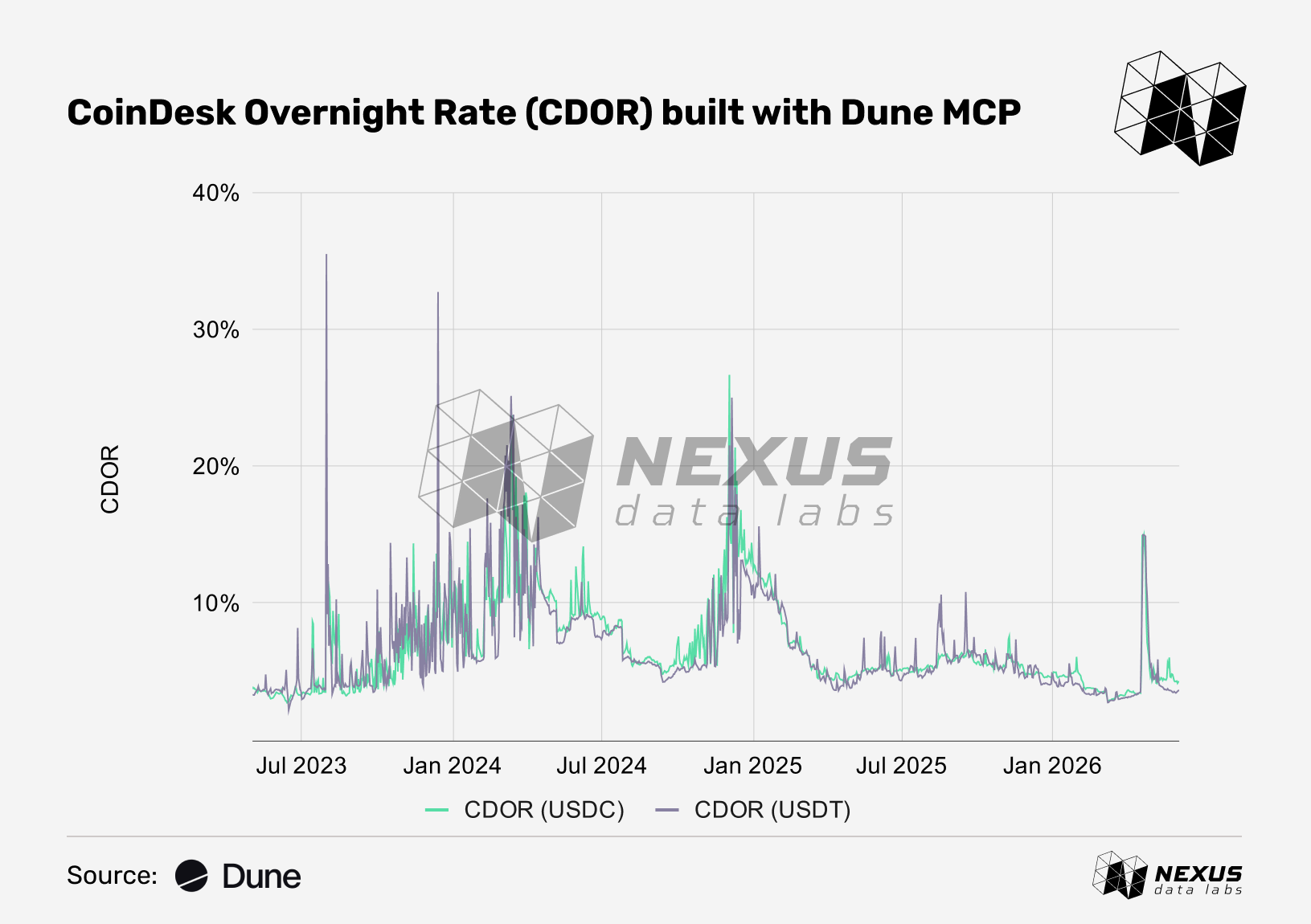
Using Dune's Model Context Protocol (MCP), the CDOR dashboard came together in under ten minutes. The workflow was simple:
Upload the methodology document
Give a short instruction to apply the methodology and calculate the overnight rate
From there, the agent handled table discovery and query construction. What would typically take hours of digesting the methodology and writing SQL now fits into a single prompt.
Closing Thoughts
Lending has been a core pillar of the onchain economy since the beginning. Through multiple cycles, the lending market has been consolidating. A handful of major protocols are pulling share through battle-tested code and superior distribution, and the gap between these incumbents and the long tail of challengers is widening. The protocols that survive each cycle are the ones that compound these advantages, and that pattern is now visible in the numbers.
However, consolidation does not equal maturity. The sector still faces a massive capital efficiency problem: overcollateralization. Onchain lending remains overwhelmingly overcollateralized, which caps capital efficiency by design. Because borrowers must lock up more capital than they borrow, onchain lending stays a narrower version of traditional credit markets, where unsecured and undercollateralized credit play a far larger role. Until DeFi cracks this constraint, its ceiling stays fundamentally limited.
Solving the undercollateralized lending puzzle will require more than clever smart contracts. The foundation is being laid. How the sector closes the capital efficiency gap without reintroducing the systemic risks that overcollateralization was originally designed to prevent will be the defining narrative of the next credit cycle.
What We're Watching
Mapping Contagion and Counterparties in the Sea of Tokens and Protocols
The Asymmetric Cost of Money: Why the Consumer Yield Rail is Migrating Off-bank
Web3 Data Jobs
Nexus is partnering with Unchain Data to highlight opportunities across the onchain data ecosystem. This week’s featured openings: