


Intro
Welcome to the thirteenth edition of Nexus Data Labs, where we highlight what matters most in the fast-developing world of onchain finance.
Thank you to 563, James, Diego, and Oğuz for contributing to this issue.
Setting the Scene
Over the past year, Hyperliquid has quietly grown beyond its original category. What began as a high-performance perpetuals DEX has evolved into a full-stack financial platform, with liquidity, token issuance, and outcome markets all integrated into a single venue.
Still, perpetuals account for the majority of activity, and that metric alone no longer captures the full picture. Hyperliquid has been steadily adding new layers to the stack, and those pieces are starting to reinforce each other.
This issue examines four fronts: Vaults, the platform's pooled trading layer; HIP-3, a framework for permissionless perpetual market creation; HIP-4, an outcome market experiment targeting the prediction market category; and USDC on Hyperliquid, a stablecoin integration that may unlock the next phase of growth.
User-curated Vaults
User-curated vaults crossed $80M in AUM, with the top 10 controlling 62% of TVL
A Hyperliquid vault functions like a managed trading pool: a vault leader runs the strategy, depositors allocate capital, and profits are distributed pro rata, with a 10% performance fee paid to the leader.
For now, user vaults on Hyperliquid remain fairly limited in scope. They can only trade native Hyperliquid crypto perps, with no access to spot, HIP-3, or HIP-4 markets. Even with those constraints, growth has been steady. AUM has more than doubled over the past year, rising from $38.9M to $81.9M as of June 2026, after peaking at $92.3M in September 2025.
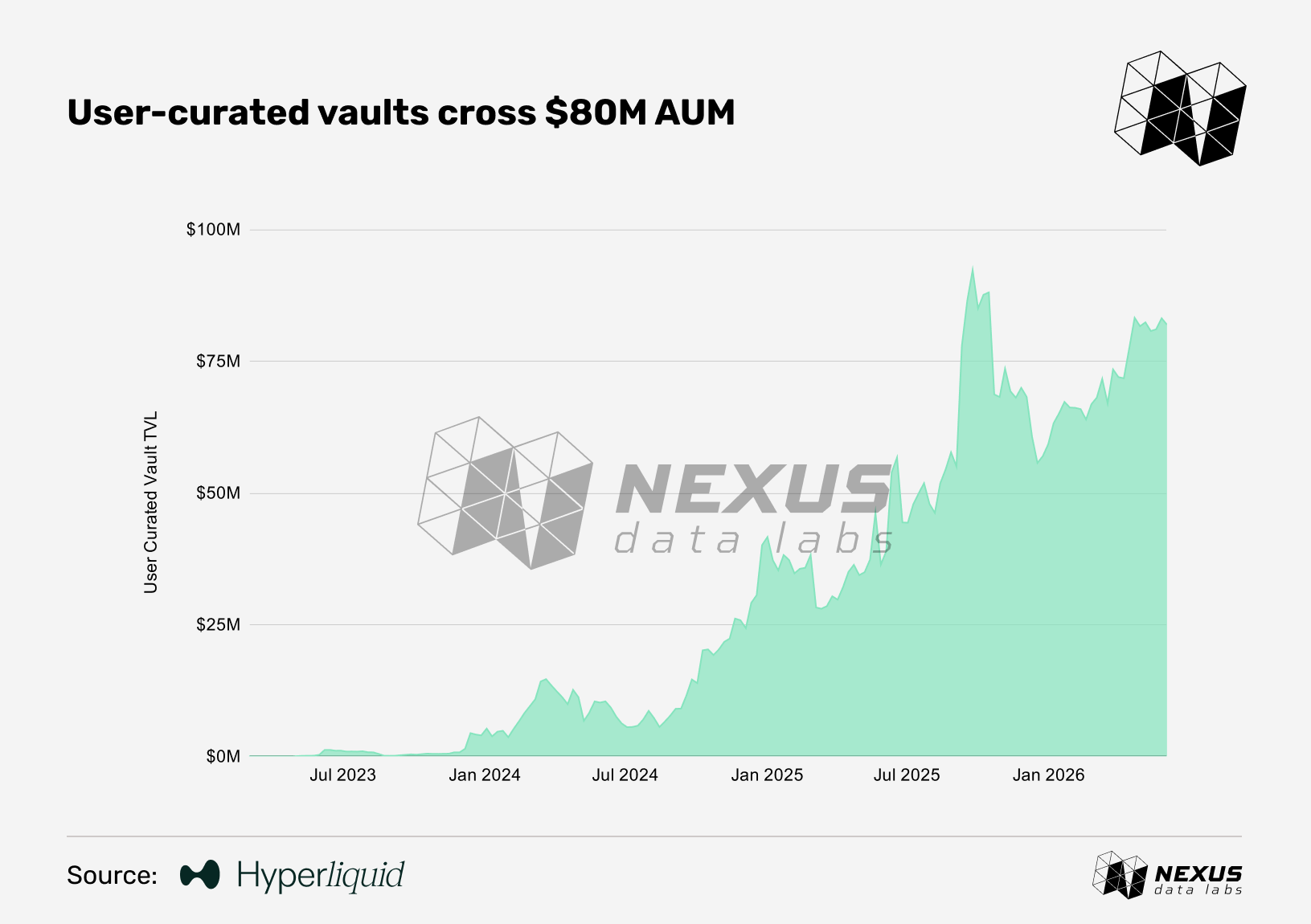
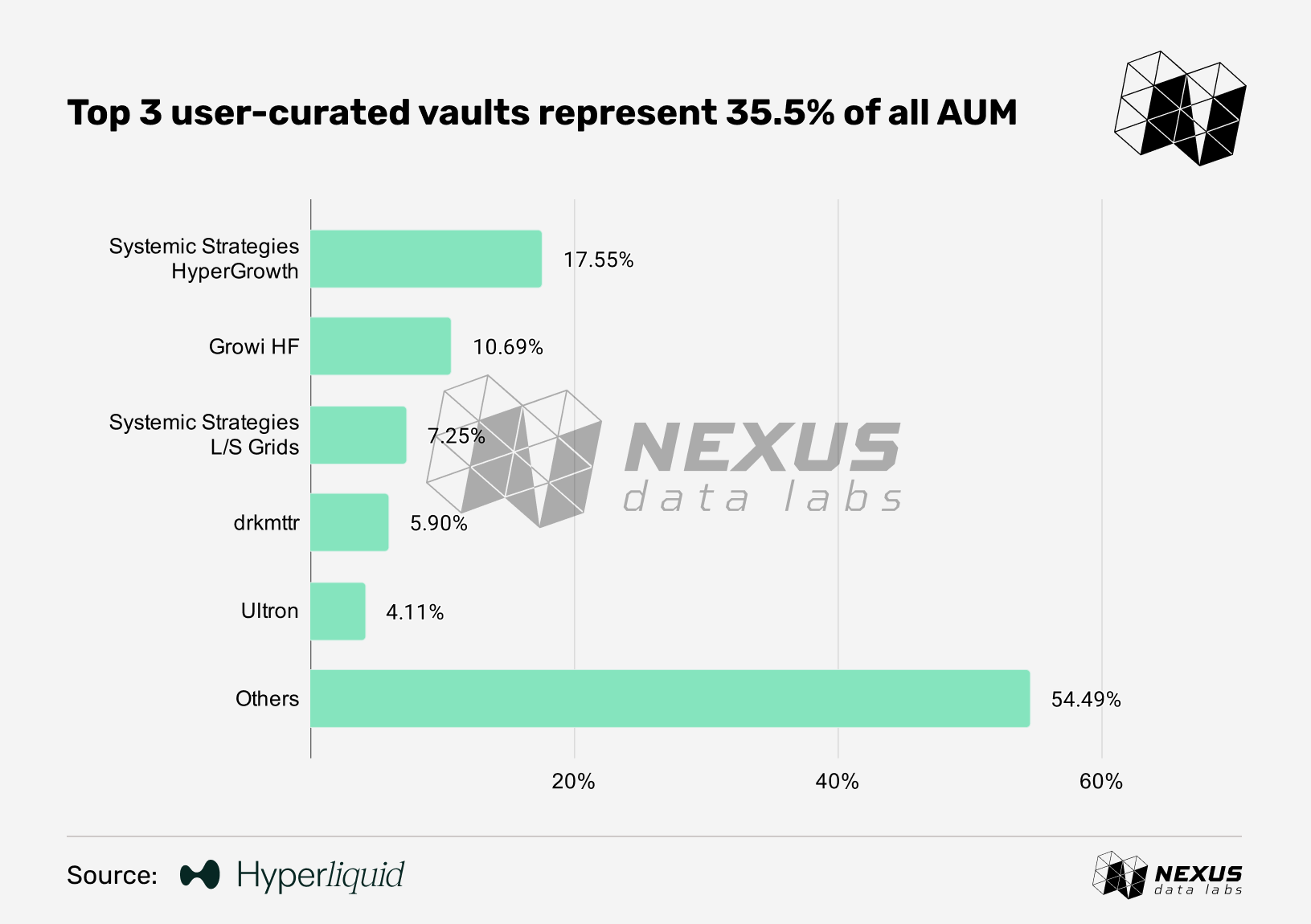
Concentration, though, is still high. Of roughly 400 active vaults, the top 10 account for 62% of total AUM ($51M). The leading vault alone holds 17.6% ($14.4M), while the top three together represent 35.5%. At the same time, 342 of these vaults were launched in 2025 or later, which suggests the ecosystem is still early.
What now looks like a rudimentary "pod-shop-as-a-service" model has the potential to evolve into something much more institutional once additional utility comes online, including additional markets, control over fee parameters, lock-ups, transparency, and privacy. In the end, the vault interface itself is the core asset. It acts as a discovery and trust layer, enabling funds and traders to monetize alpha onchain rather than routing that activity offchain.
HIP-3 Markets
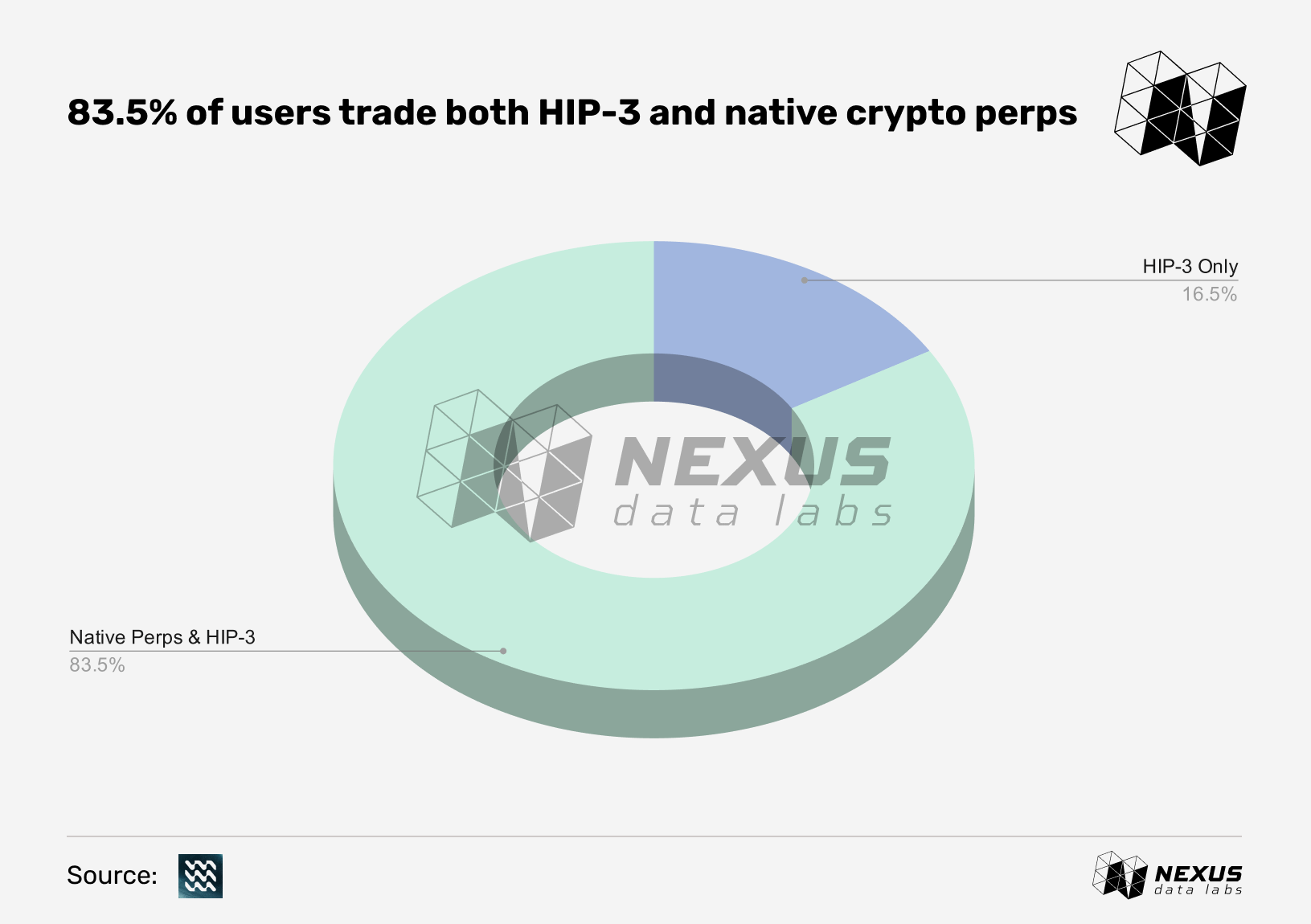
83.5% of HIP-3 traders also trade Hyperliquid's native crypto perps
HIP-3 may be a new product, but the traders are not new. 8,343 wallets account for roughly 96% of HIP-3 volume, and 83.5% of them also traded Hyperliquid's native crypto perps.
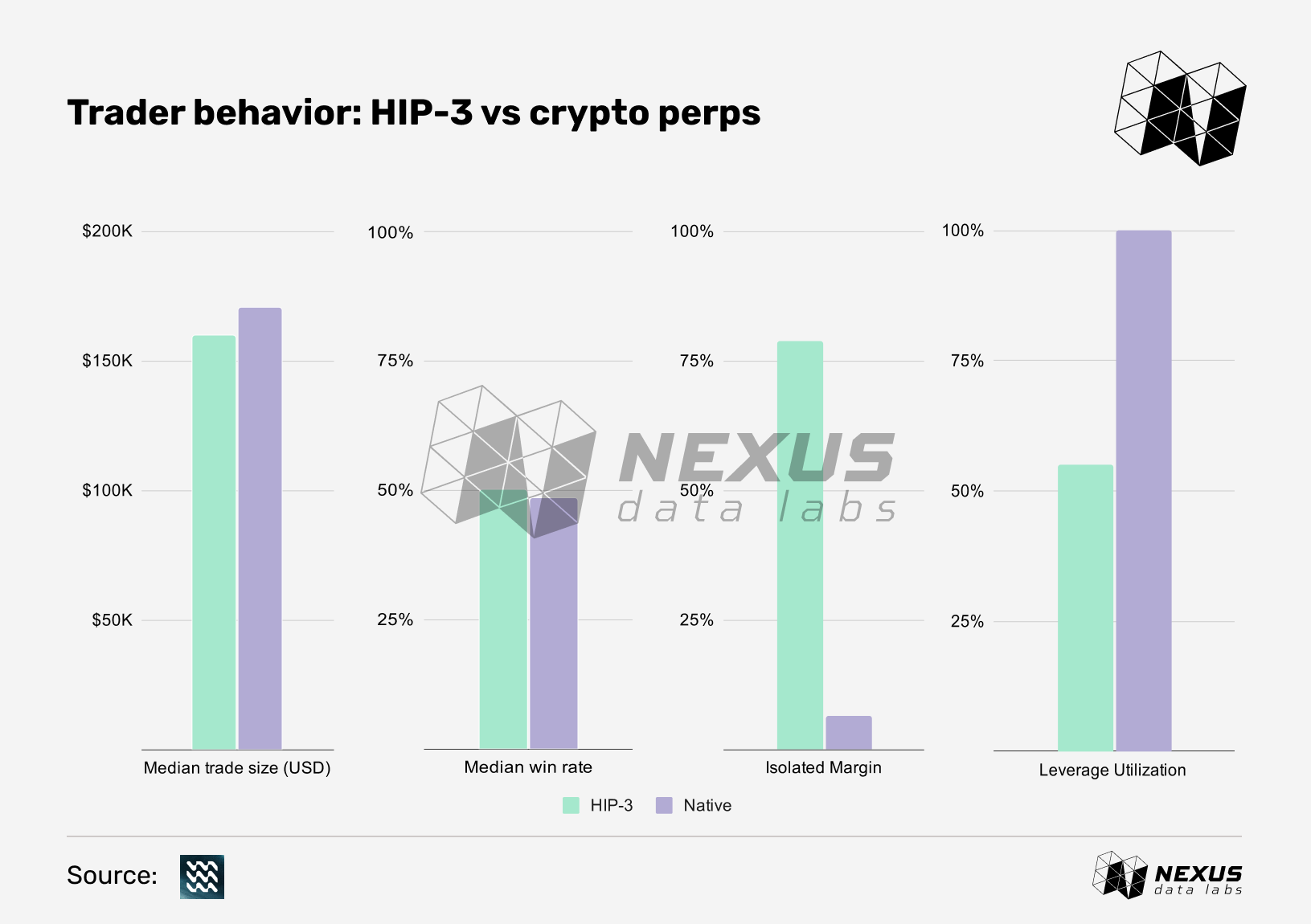
Across a sample of these dual-venue wallets, the trading behavior looks nearly identical: median trade size of roughly $160K vs $170K, and win rate of 50% vs 48%. The bigger difference shows up in how risk is managed. On native perps, these wallets peg leverage at the cap, running 100% utilization and cross-margin, with only 6% of positions isolated. In other words, they borrow the maximum the market allows, and nearly all positions share one collateral pool, so a loss on any single trade can pull margin from the rest of the account.
HIP-3 looks different. The same wallets use just 55% of available leverage and ring-fence 78% of positions in isolated margin. They borrow only about half of what they are allowed, and they keep most trades separated, so if one position is liquidated, it only loses its own collateral instead of putting the whole account at risk. This restraint is a choice. No rule requires isolated margin, and HIP-3 allows higher leverage than native perps. Put simply, the same traders adopt far more TradFi-style risk discipline the moment they trade tokenized stocks, gold, and oil.
HIP-4 Markets
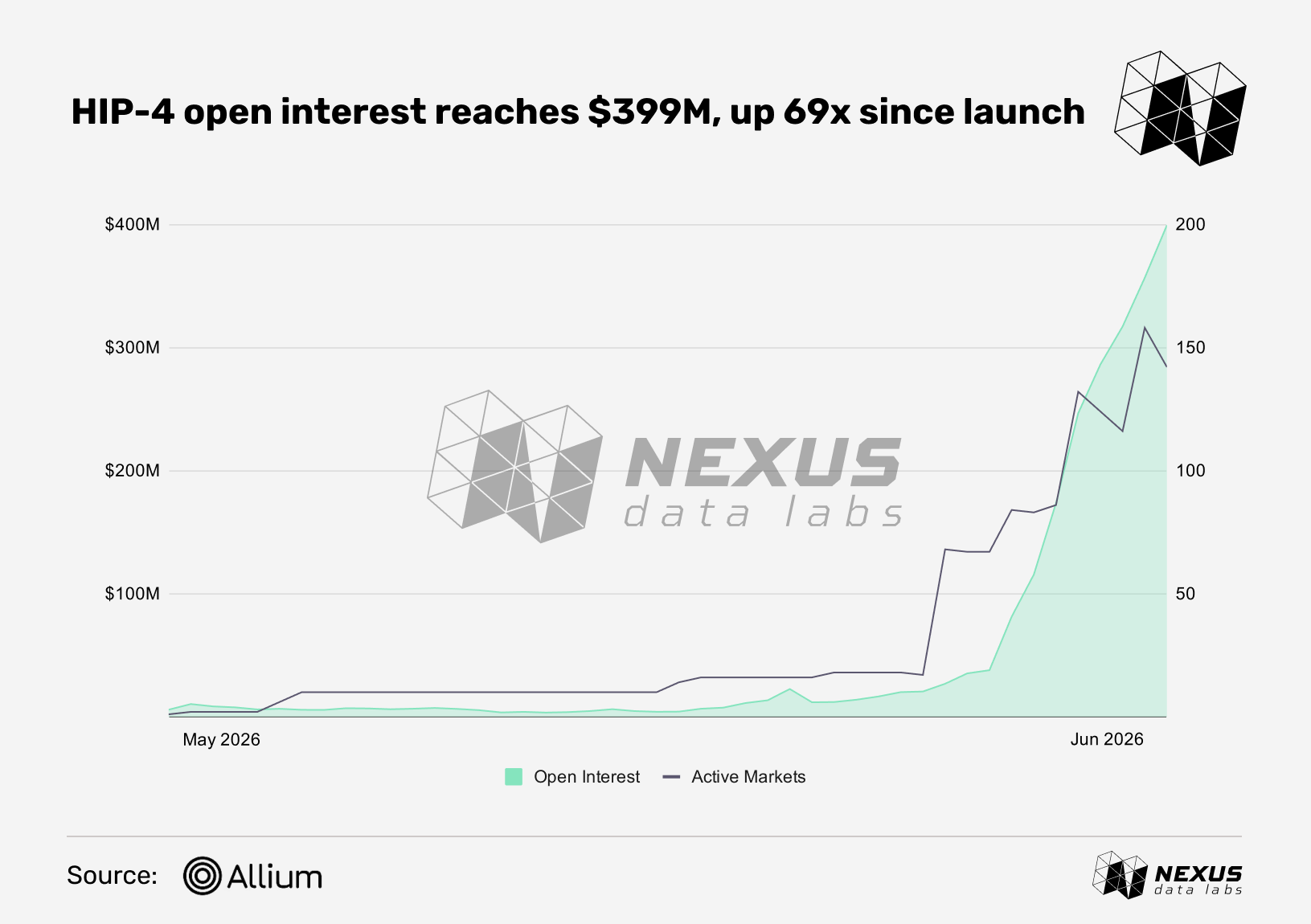
HIP-4 crosses $161M in cumulative volume as open interest hits a $399M ATH
Launched on May 2, 2026, Hyperliquid's native onchain outcome market layer has scaled rapidly. In just 46 days, HIP-4 has generated more than $161M in cumulative volume across 2.91M trades, while open interest reached an all-time high of $399M on June 16, up 69x from $5.76M on day one.
Growth has been nonlinear. After a mid-May plateau at around 10 active markets, both volume and open interest re-accelerated sharply. The number of active markets expanded from 10 to 67 on June 6, 2026, and surpassed 150 a week later, largely driven by the rollout of 2026 World Cup markets.
The $161M in cumulative volume also masks a clear split in trader behavior across market types. Price binary markets dominate, accounting for 71% of total volume ($114M) across 2.42M trades, with an average size of $55. Standard binary markets, by contrast, have generated $10M across just 28.6K trades, with an average trade size of $482, nearly 9x larger. The result is two distinct liquidity and risk profiles emerging across market categories.
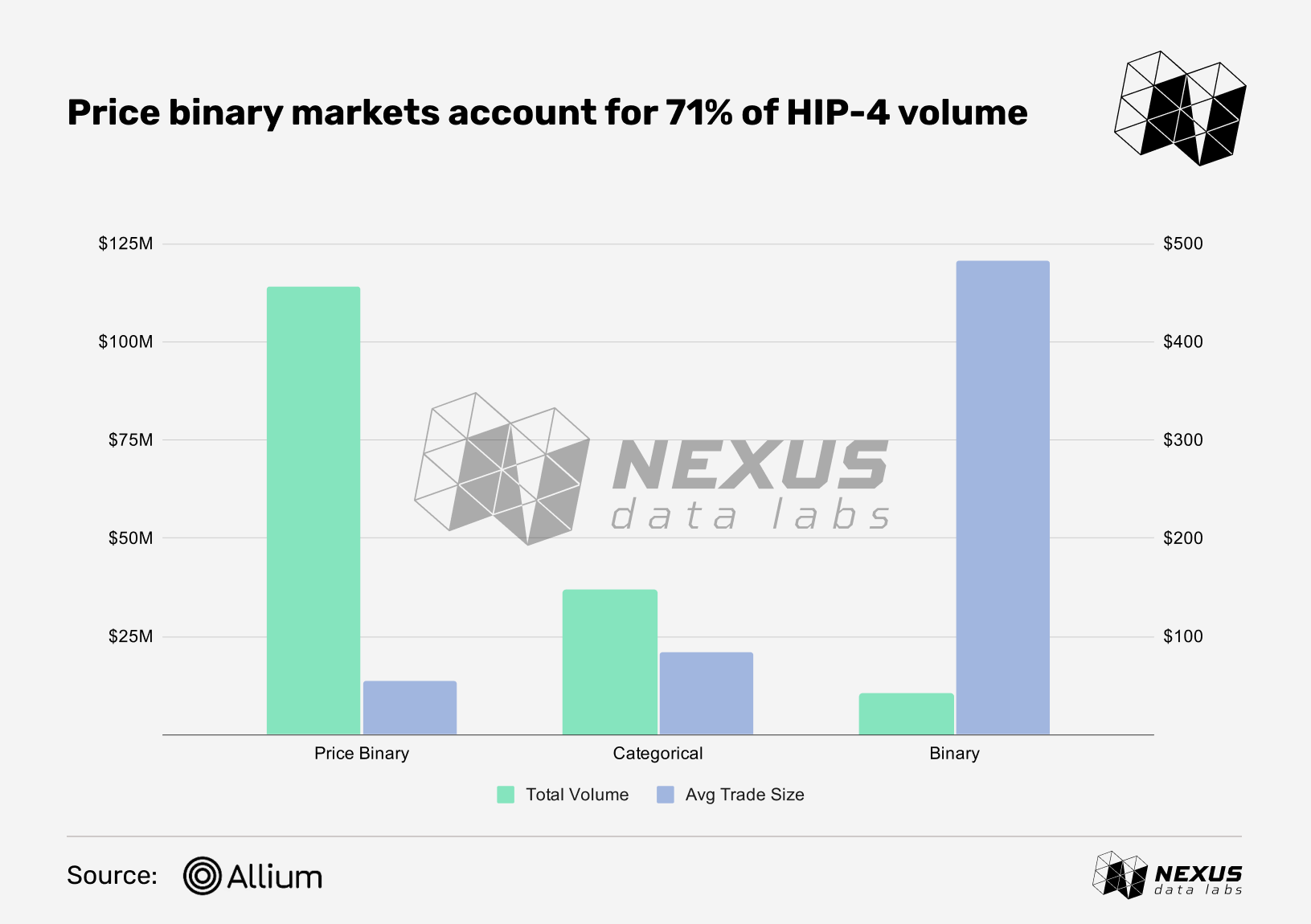
Editor's note: HIP-4 supports three market types. Price binary markets ask whether an asset will trade above or below a specific level at a set time (e.g. BTC ≥ $62,720 at June 18, 06:00 UTC). Binary markets are straightforward yes/no outcome questions without a price component (e.g. Will the Fed cut rates in June?). Categorical markets offer three or more mutually exclusive outcomes (e.g. 2026 World Cup Champion) with one position corresponding to each outcome.
USDC on Hyperliquid
USDC supply on HyperEVM increased 3.6x over the past four weeks, with ~85% now concentrated in Coinbase's AQAv2 wallet
Following Coinbase’s USDH acquisition on May 14, 2026, USDC activity accelerated materially. Mint and burn volume increased by $3.77B, bringing the 10-month total to $5.25B. Over the same period, TVL on the Arbitrum bridge fell by approximately $2B, signaling a shift in where liquidity is being held and managed.
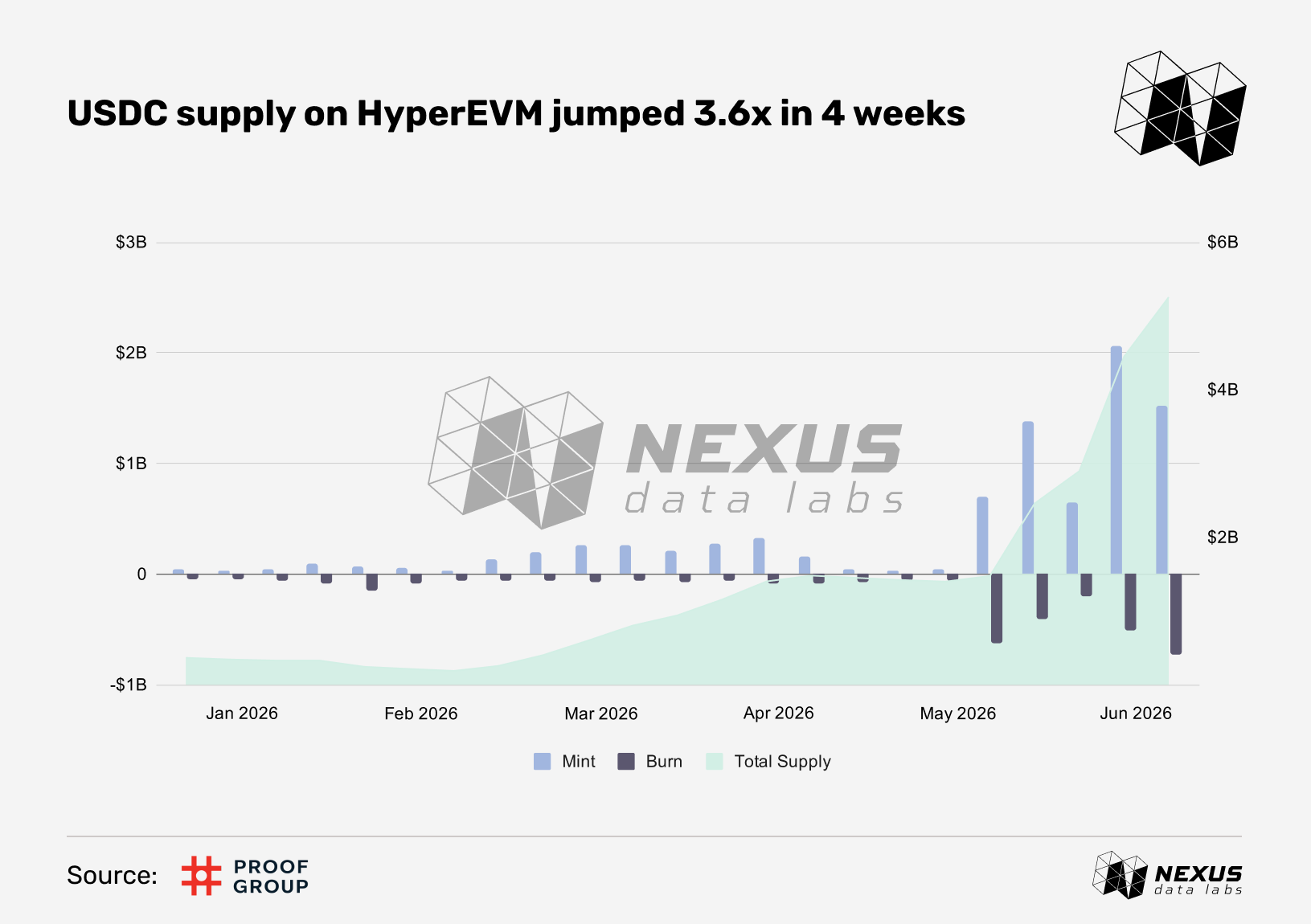
This is not just a jump in USDC usage within HyperCore. It is a structural migration of the liquidity layer, shifting from bridge-based flows on Arbitrum to treasury wallets on HyperEVM. Coinbase and Circle treasury wallets now account for approximately 95% of total USDC supply on HyperEVM.
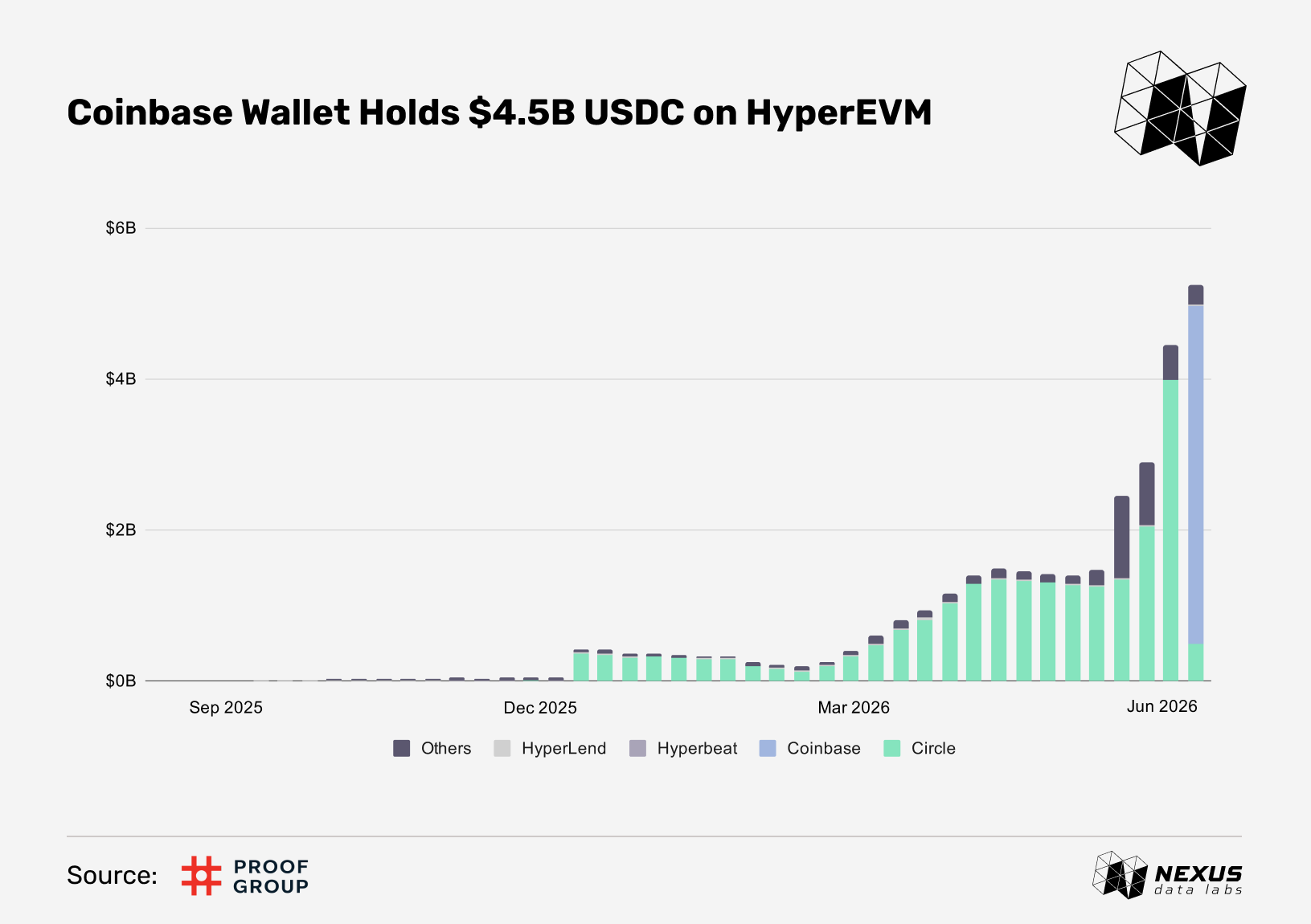
That shift intensified last week when Coinbase activated its AQAv2 wallet, a framework that defines the roles of technical and treasury deployers while introducing greater transparency around yield, staking, and slashing. As part of this rollout, Coinbase transferred $4.4B in USDC from a Circle-controlled address to its own, marking the largest USDC transfer on record.
Closing Thoughts
What began as a perp DEX built to bring the centralized-exchange experience onchain, without venture backing, has evolved into one of the most structurally distinct platforms in crypto. Hyperliquid did not just compete on performance. It is testing how much of the financial stack can be vertically integrated into a single venue.
With HIP-3 enabling permissionless creation of perpetual markets and HIP-4 introducing onchain outcome markets, Hyperliquid is moving beyond a trading venue into a platform for market creation. The USDC integration, particularly Coinbase's involvement, reinforces that shift. Together these changes mark a new phase of growth, and a new set of dependencies.
The competition is converging from both sides. Hyperliquid is expanding from perps into outcome markets through HIP-4, while the prediction market leaders move the other way. Kalshi launched CFTC-regulated crypto perps in May 2026, and Polymarket is building its own perps product. The open question is whether Hyperliquid's vertically integrated model delivers durable product-market fit, or whether the market fragments across multiple players competing for the same flow.
What We’re Watching
Web3 Data Jobs
Nexus is partnering with Unchain Data to highlight opportunities across the onchain data ecosystem. This week’s featured openings:
