


By J.W.
The article is also available on X.
The Tokenization Hype: Misalignment with DeFi Reality
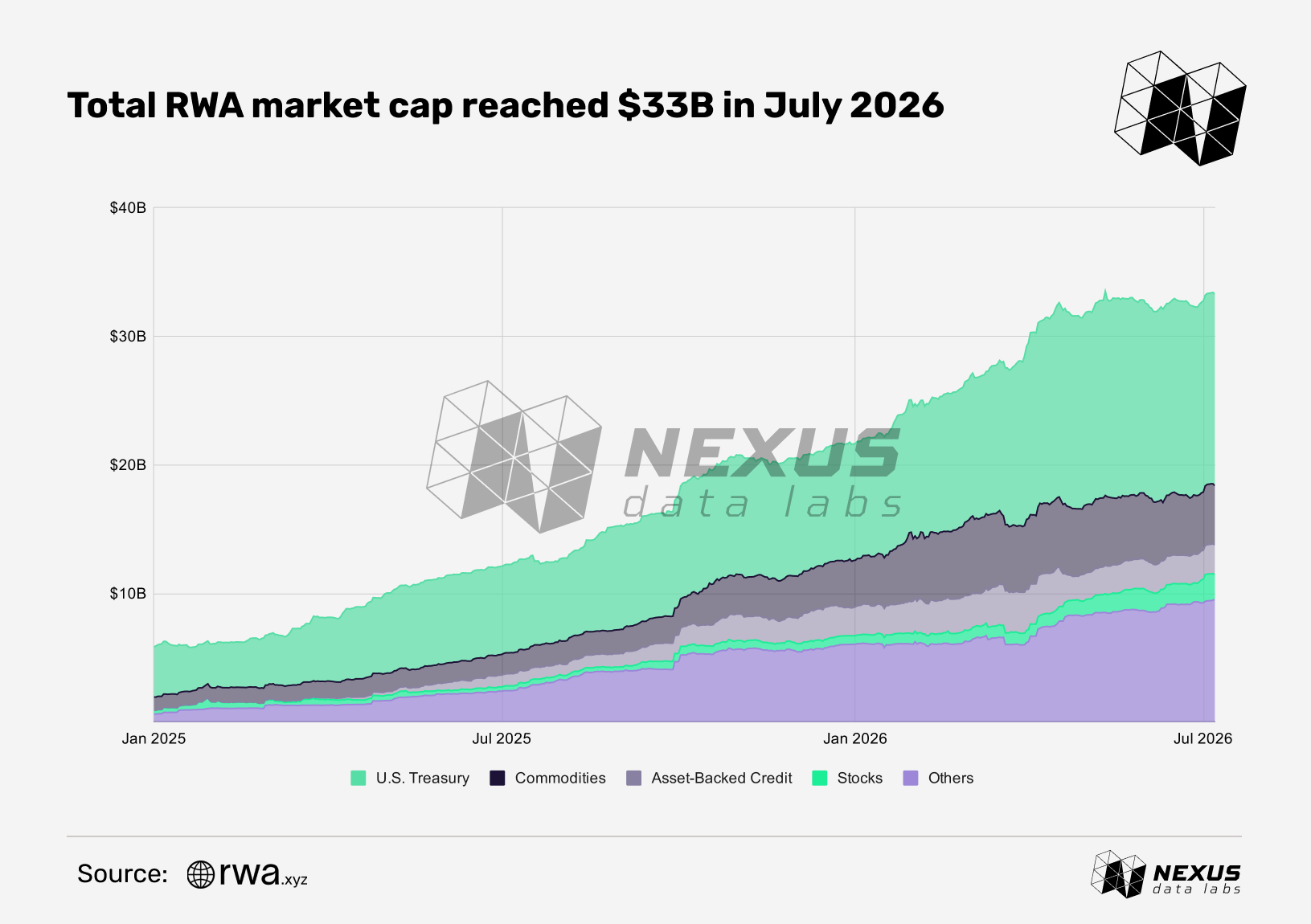
Tokenization has become one of the dominant narratives around blockchain’s role in modern finance. From stablecoins to tokenized funds, the industry has made steady progress in bringing traditional assets onchain. Institutional participation has followed, with firms like BlackRock signaling confidence in the infrastructure. But the gap between narrative and reality remains wide.
In practice, most tokenized assets are underutilized. Liquidity is thin, redemption pathways are constrained, and regulatory overlays, particularly KYC and jurisdictional restrictions, limit composability. For many institutions, tokenization is a proof of concept, or an optics play, rather than a working tool for yield or risk management. The result is an ecosystem where assets are mirrored on public ledgers rather than transforming the existing capital structure.
Asset-Backed Securities: A Natural Fit for Blockchain
Among the candidates for onchain integration, asset-backed securities (ABS) present a structurally different opportunity. ABS follow rigid, deterministic cash flow rules and route payments through a network of intermediaries. That structure maps cleanly onto smart contracts, where execution can be automated with minimal ambiguity.
At the same time, ABS remains a large and operationally complex market. PIMCO estimates the global securitized products market at roughly $14 trillion. At that scale, even marginal improvements in efficiency, whether through cost reduction or faster settlement, compound into billions in savings.
What are Asset-Backed Securities?
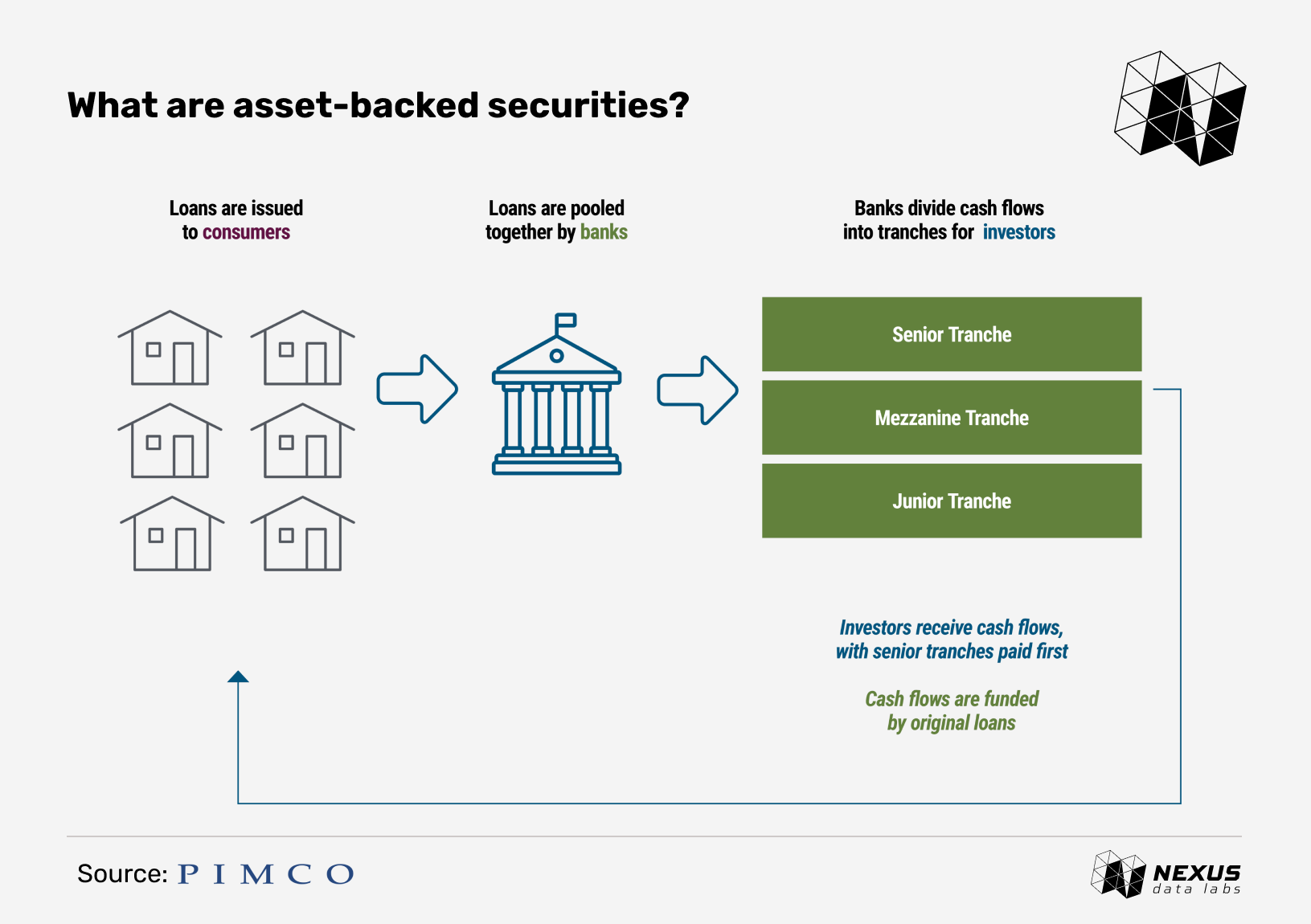
Asset-backed securities (ABS), a category that includes securitization, structured products, and structured credit, are financial instruments backed by pools of income-generating assets such as auto loans, mortgages, or credit card receivables. The pooled assets serve as collateral, and their cash flows are allocated to investors through a “waterfall” structure that defines the order of payments. Senior tranches are paid first, followed by mezzanine tranches, and then subordinated or equity tranches. Lower tranches absorb losses first and therefore carry higher risk, but also offer the potential for greater returns
From Experiments to Early Product-Market Fit
Onchain imitations of ABS, such as Tranchess or BarnBridge, failed to gain lasting traction. More recent approaches have taken a different route: bringing real-world credit strategies onchain rather than rebuilding them from scratch.
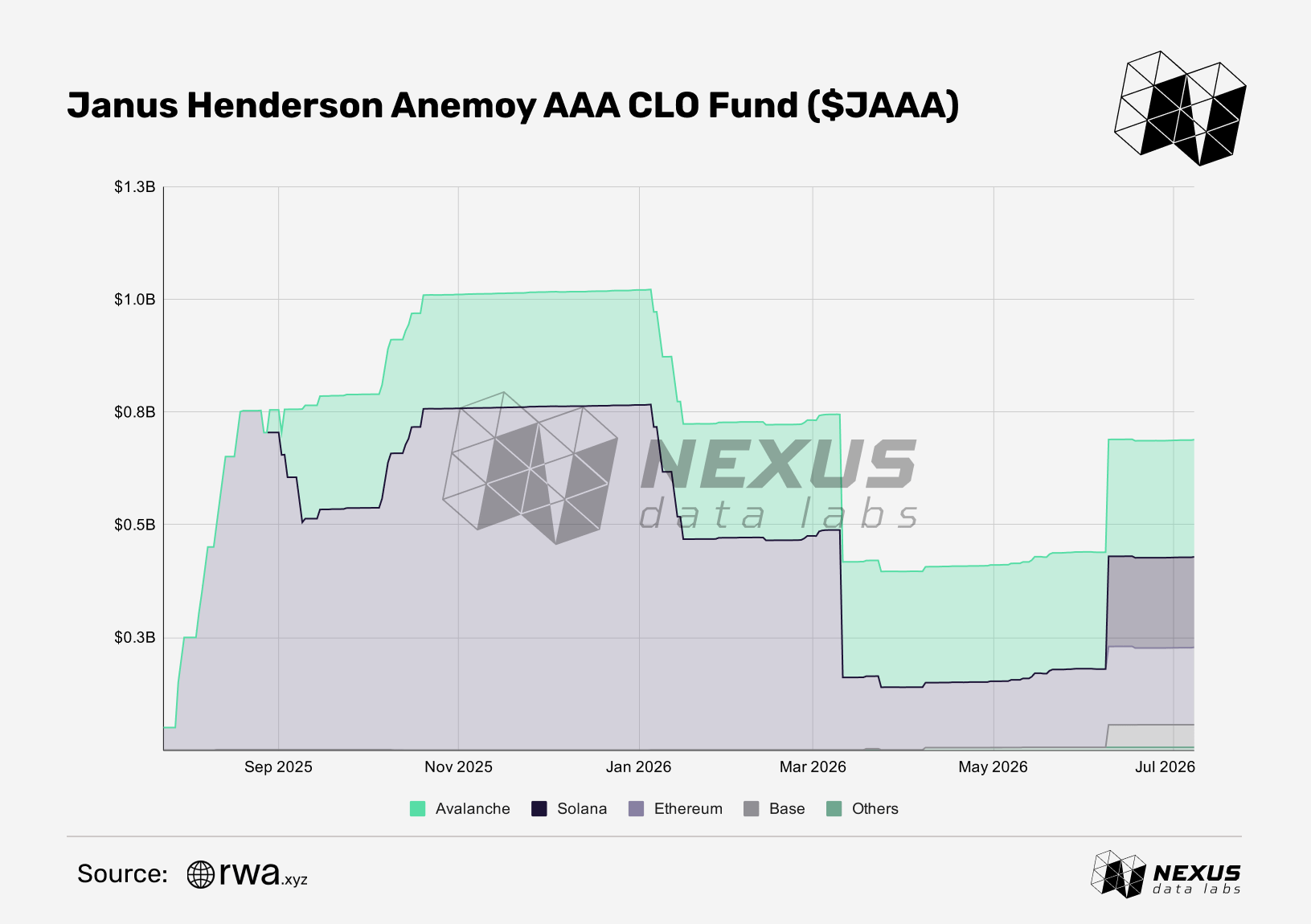
Janus Henderson's JAAA fund, launched with Centrifuge, is the clearest example. Most tokenized funds work like a receipt. The fund remains offchain, ownership records stay with traditional administrators, and the token represents a claim on it. JAAA is not a wrapper around an offchain original. The fund is issued directly on the blockchain, where investors subscribe and redeem onchain, running the same AAA collateralized loan obligation (CLO) strategy as its $21B traditional counterpart.
To be clear, this is not onchain securitization. The underlying CLOs are still issued, administered, and paid through traditional infrastructure. Only the fund layer is onchain. But it shows the demand side works, and that is the harder half of the problem. The securitization layer itself is the next piece to move onchain.
Key Advantages of Tokenizing ABS
1. Deterministic Waterfall Logic
ABS cash flows follow strict rules that dictate the priority and amount of each payment. The typical hierarchy for distribution is as follows:
Fees and expenses (trustee, servicer, legal)
Senior note interest and principal
Mezzanine note payouts
Junior/subordinated note payouts
Residual payments to equity holders
These allocation rules are entirely algorithmic. When collection and expense thresholds are met, cash flows are apportioned mechanically. There is no ambiguity and no subjective interpretation, which is exactly what smart contracts require. Unlike financial products that depend on human judgment, ABS waterfalls can be executed precisely and transparently, removing the operational risk that manual administration introduces.
2. Eliminating the Intermediary Layer
Traditional ABS structures involve numerous intermediaries:
Trustee
Servicer
Backup Servicer
Calculation Agent
Accountants
Each performs a necessary function: administering the trust, overseeing cash flow disbursements, managing delinquencies, and conducting audits. Each also charges fees and introduces reconciliation delays, contributing to the "intermediary tax." Some roles cannot be eliminated for legal reasons, but much of the monitoring, calculation, and disbursement can move to smart contracts. Lower administration costs mean a larger share of the underlying asset yield reaches tranche holders.
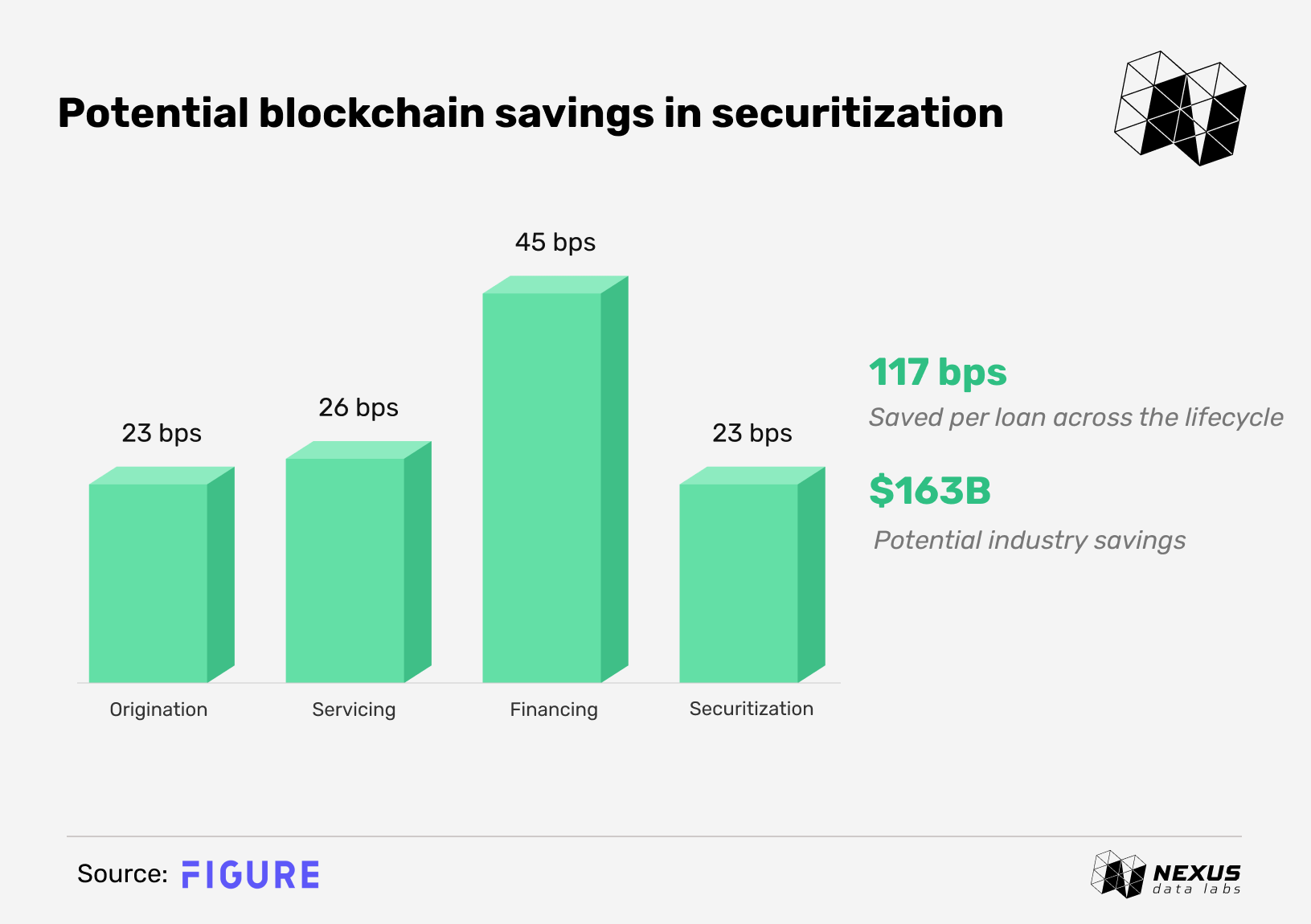
This is not hypothetical. In March 2020, Figure Technologies sponsored the first blockchain-native securitization, FLOC 2020-1, a $150M home equity line of credit (HELOC) deal backed by loans originated, financed, and sold on its Provenance blockchain. Figure's published case study puts the collective benefit at 117 basis points across the loan lifecycle: lower third-party costs, smart contracts replacing manual verification and reconciliation, and capital freed by real-time settlement. Extrapolated across the market, that is over $163B in potential savings.
One completed deal does not modernize a $14 trillion market. But it establishes the empirical floor. The intermediary tax is measurable, and removing it is worth roughly a full point of yield.
3. Real-Time Data and Settlement
ABS administration today requires multi-party reconciliation:
Servicer: Tracks individual loan performance
Trustee: Maintains trust accounts and payment records
Calculation Agent: Manages the waterfall payment calculations
Rating Agencies: Update surveillance models
Investors: Monitor positions separately through custodians
These parallel systems must reconcile with one another on a recurring cycle. The process can take 25 days or more from the moment servicers receive loan payments to the moment investors receive statements. During that window, capital remains idle in collection accounts. A blockchain replaces these parallel systems with a single, immutable ledger accessible in real time. The result is fewer errors, shorter delays, and a tamper-proof audit trail for regulators.
Expanding the Buyer Base
Tokenization also changes how ABS can be distributed and used. These markets have traditionally been dominated by institutional investors, but onchain issuance changes the access model. AAA-rated tranches can serve as collateral for stablecoin yield products like Sky's sUSDS or Ethena's USDe, or back positions in lending protocols. Higher-risk tranches can be packaged into yield strategy vaults. Both designs grow more attractive as Treasury and money market yields compress.
Looking ahead, these innovations may bring ABS to retail investors, though access will arrive with regulatory safeguards and restrictions. The building blocks already exist. Asset managers like Gauntlet or Steakhouse could curate vaults blending ABS products across tranches, abstracting away the underlying securities and offering diversified yield exposure in a single instrument. That path could broaden participation for retail and institutional investors alike.
Closing Thoughts
This article does not attempt to predict which blockchain or company will pioneer the tokenization of asset-backed securities. Earlier efforts to onboard financial institutions onto blockchain often lacked a tangible benefit, and competition among chains fragmented what momentum existed.
Asset-backed securities are different. Their defined payment structures and smart contract compatibility make them an ideal blockchain use case. Full automation of every intermediary role will take time, but the reductions in cost, friction, and settlement delay are achievable now, and they create value for both originators and investors.
As TradFi and DeFi converge, ABS tokenization offers a concrete path forward: adoption, transparency, and efficiency where the market needs them most. Which platforms capture the opportunity remains uncertain, but the experimentation required to find out is already underway. Tokenized ABS could be more than mere optics. This is a use case worth building.
What We’re Watching
The Collateral Dollar: Stablecoins and the Haircut Channel in the Offshore Dollar System
Lighter vs Hyperliquid: Who Has Control Over Your Collateral, Orders, and Open Positions?
Web3 Data Jobs
Nexus is partnering with Unchain Data to highlight opportunities across the onchain data ecosystem. This week’s featured openings: