


1. What Is the TOTAL2 Index?
Every crypto cycle has two stories: Bitcoin’s and everything else. TOTAL2 is the index that tracks the latter.
TOTAL2 tracks the combined market cap of the top 125 cryptocurrencies excluding Bitcoin. It covers the full breadth of the non-Bitcoin crypto market: Ethereum, Solana, layer 2s, DeFi protocols, and every other asset competing for capital outside of Bitcoin.
The formula is simple: take the combined market cap of the top 125 crypto assets and subtract Bitcoin’s market cap.
TOTAL2 = Top 125 Crypto Assets Market Cap − Bitcoin Market Cap
Like OTHERS, TOTAL2 is denominated in dollars, not as a percentage. It measures the total capital allocated to non-Bitcoin crypto assets at any given moment. When TOTAL2 rises, the combined market cap of non-Bitcoin crypto assets is growing, and vice versa. Where BTC Dominance shows whether capital is concentrated in Bitcoin specifically, TOTAL2 shows the full picture of what is happening everywhere else.
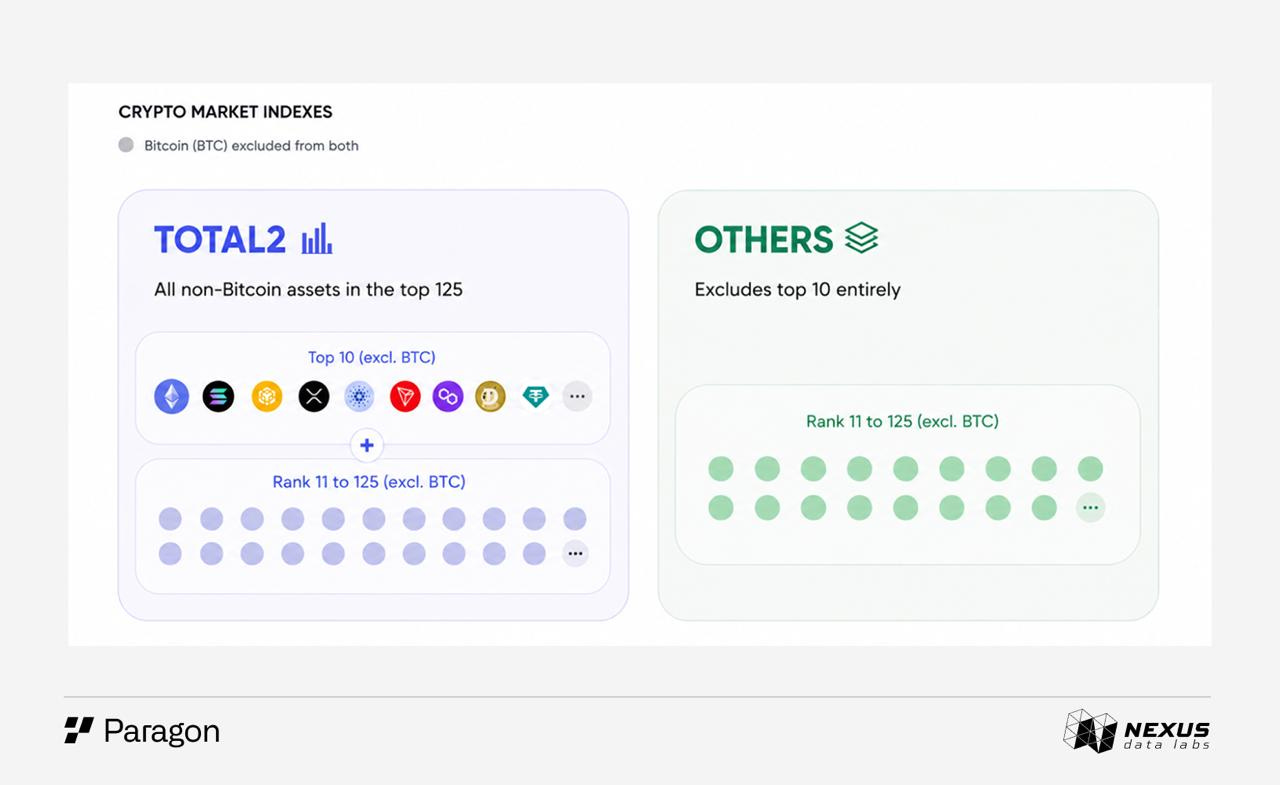
It is worth clarifying the difference between TOTAL2 and OTHERS, as the two indices are related but measure different segments of the market. TOTAL2 covers all non-Bitcoin assets in the top 125, including Ethereum and the rest of the top 10. OTHERS excludes the top 10 assets entirely. In other words, OTHERS is a subset of TOTAL2, not the other way around.
2. Why Does the TOTAL2 Index Move?
Risk appetite and market sentiment. TOTAL2 grows when investors are willing to deploy capital beyond Bitcoin. When risk appetite is high, capital flows into Ethereum and the broader altcoin market, pushing TOTAL2 higher in dollar terms. When fear takes over, altcoin exposure is reduced and TOTAL2 contracts.
Altcoin innovation cycles. Every cycle produces a new theme that pulls capital into the broader altcoin market. DeFi in 2020, NFTs in 2021, AI tokens in 2024. Each wave expanded TOTAL2 as money chased the latest narrative.
Ethereum as the anchor. Ethereum is the largest single component of TOTAL2 by a significant margin. Its price performance has an outsized effect on the index. When Ethereum appreciates, it tends to lift the broader index. When it sells off, it can weigh on TOTAL2 even when other assets are holding up.
Stablecoin distortion. TOTAL2 includes stablecoins like USDT and USDC, which now collectively exceed . Stablecoin accumulation can inflate the index even when there is no genuine shift in investor appetite for altcoins.
3. TOTAL2 Across Market Cycles
TOTAL2 has expanded and contracted across every major crypto cycle, but the drivers behind each move have been different.
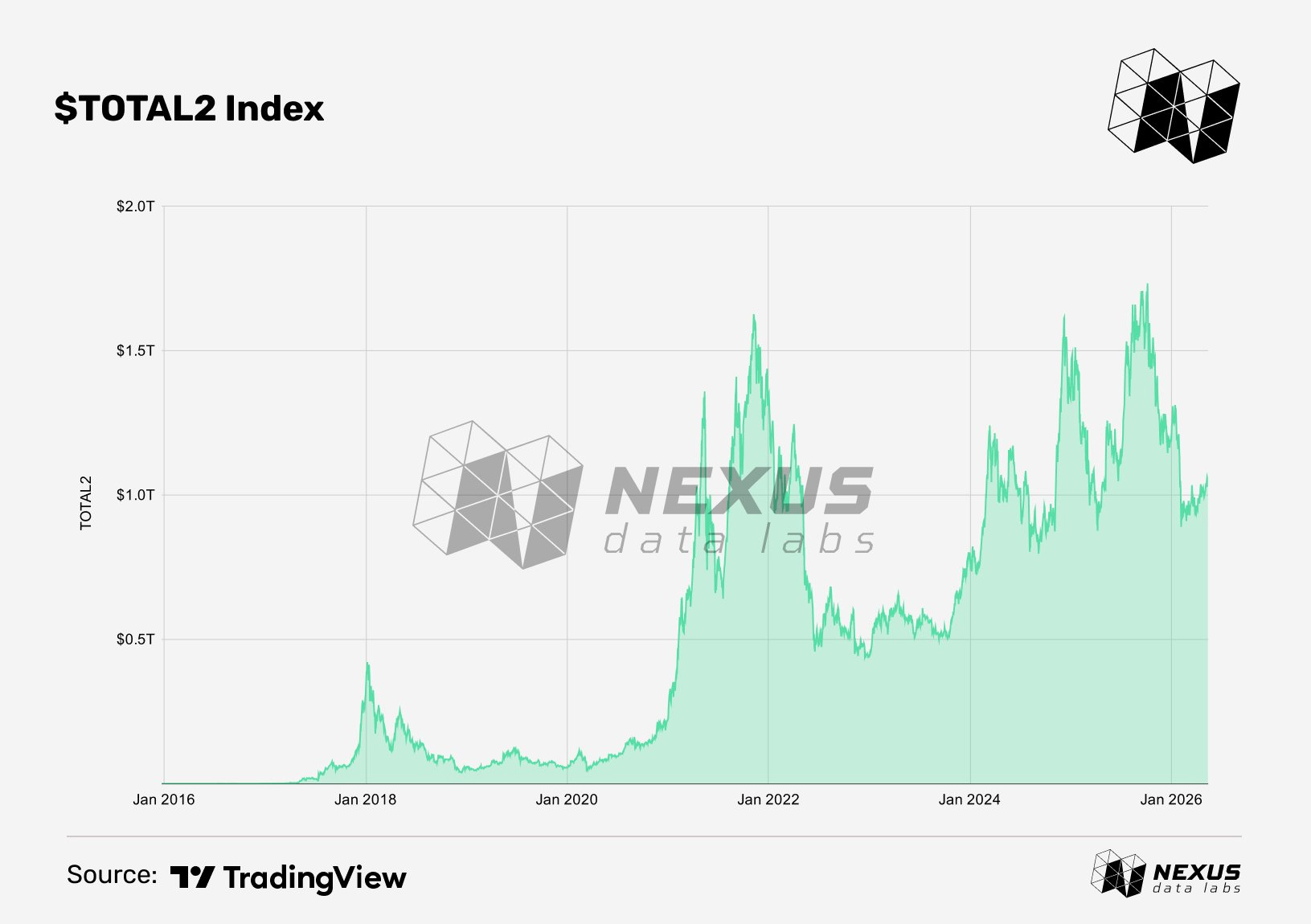
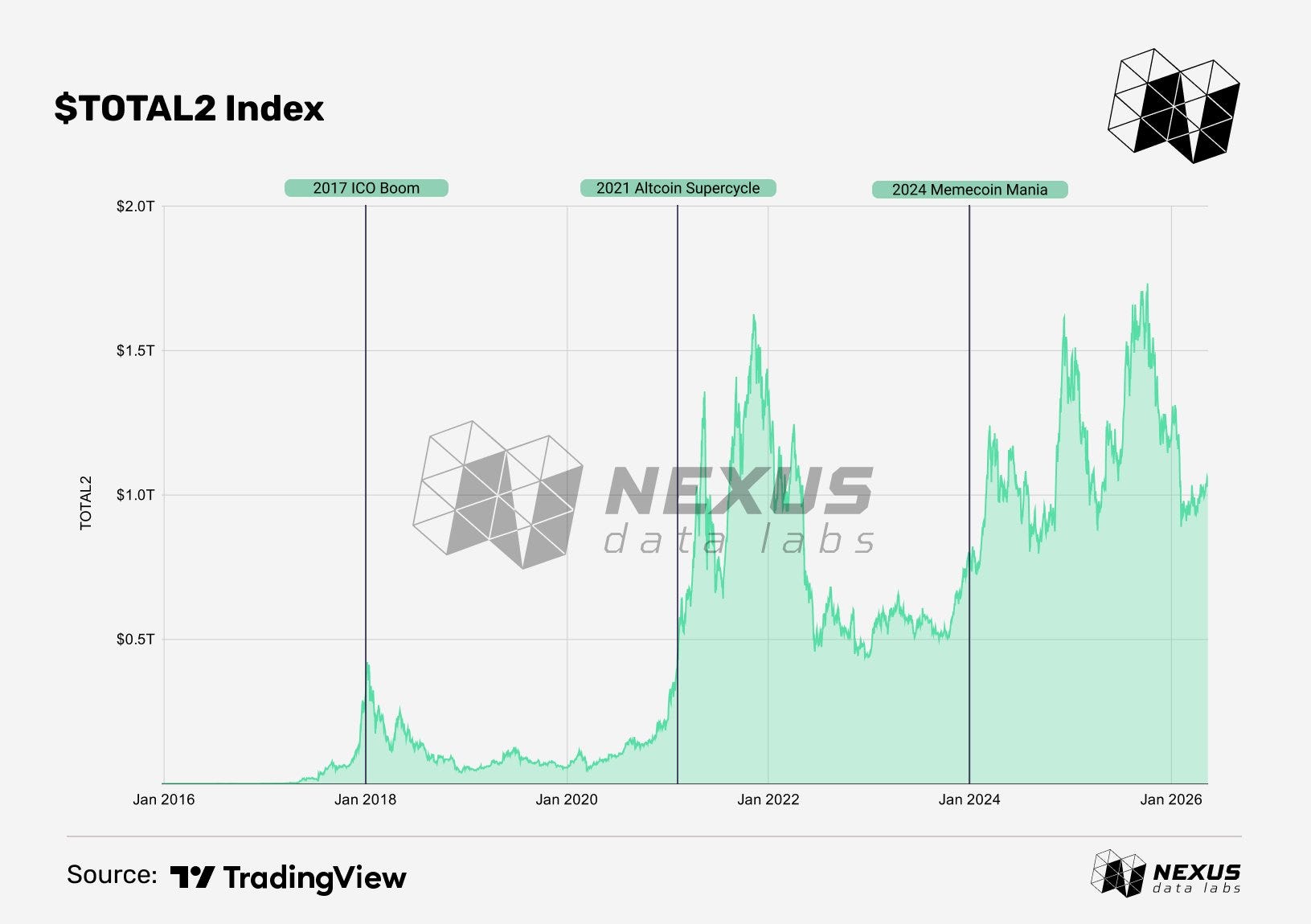
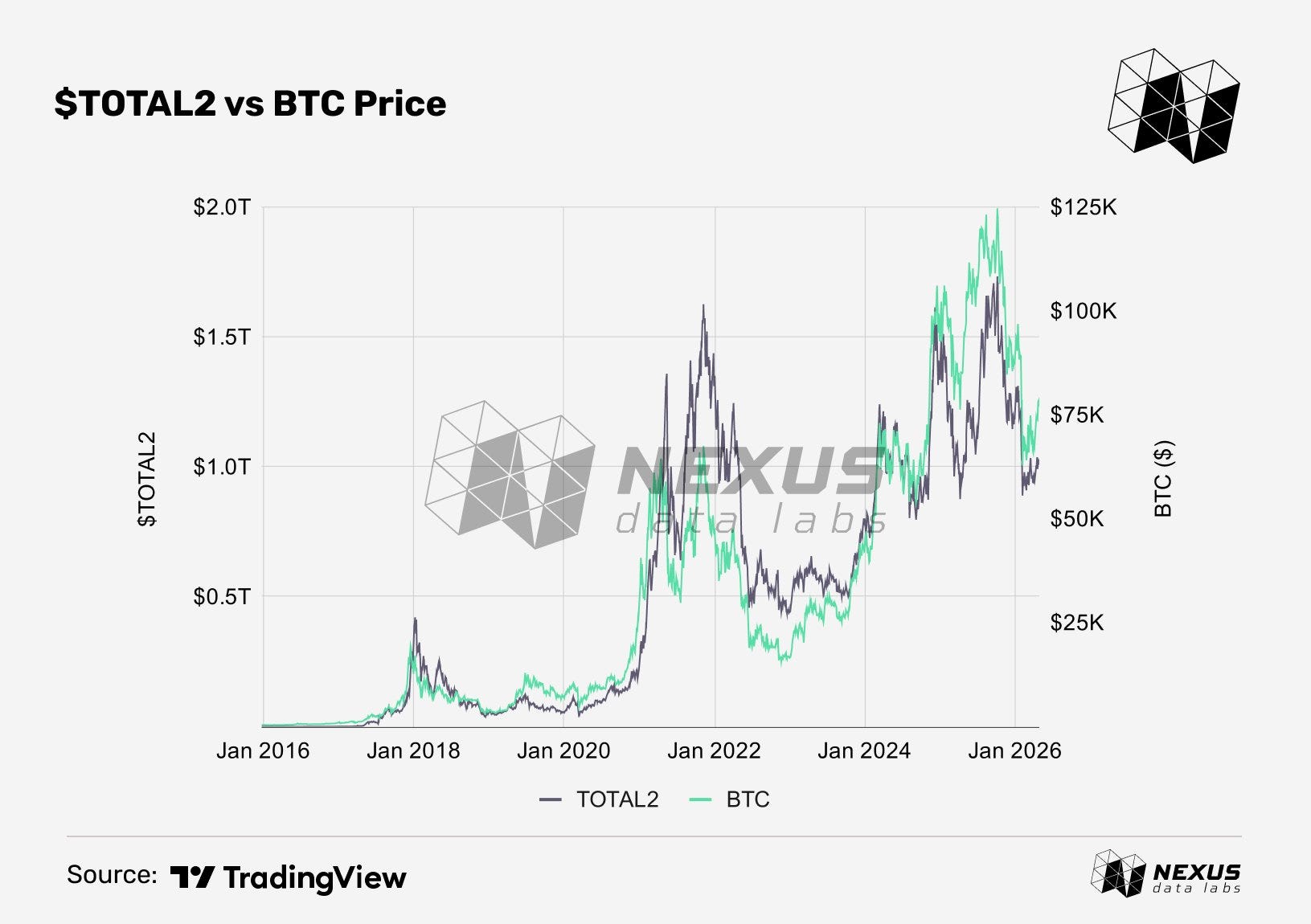
2017 ICO boom. TOTAL2 surged from under $1B in early 2017 to over $400B at its January 2018 peak as the ICO wave flooded capital into thousands of new tokens. The collapse was equally swift, with TOTAL2 losing 90% of its value by late 2018.
2021 altcoin supercycle. TOTAL2 reached its all-time high in late 2021, peaking at approximately $1.6T as DeFi protocols, NFTs, and alternative layer 1s attracted capital across the entire crypto market. Ethereum led the move, but participation across the altcoin market was broader than any previous cycle.
2024 memecoin and AI rotation. Memecoins and AI tokens drove a sharp expansion in TOTAL2 even as Bitcoin set new highs on its own track. The broader altcoin market moved primarily on narrative momentum in this cycle. Capital chased themes, not infrastructure.
2024 to 2025 institutional era. The pattern shifted. Spot Bitcoin ETF inflows concentrated capital in Bitcoin through 2024, with Ethereum ETF flows gaining momentum later in 2025. Institutional capital entered crypto through regulated products that favored the two largest assets. The broader altcoin market did not benefit proportionally.
4. How to Read the TOTAL2 Index
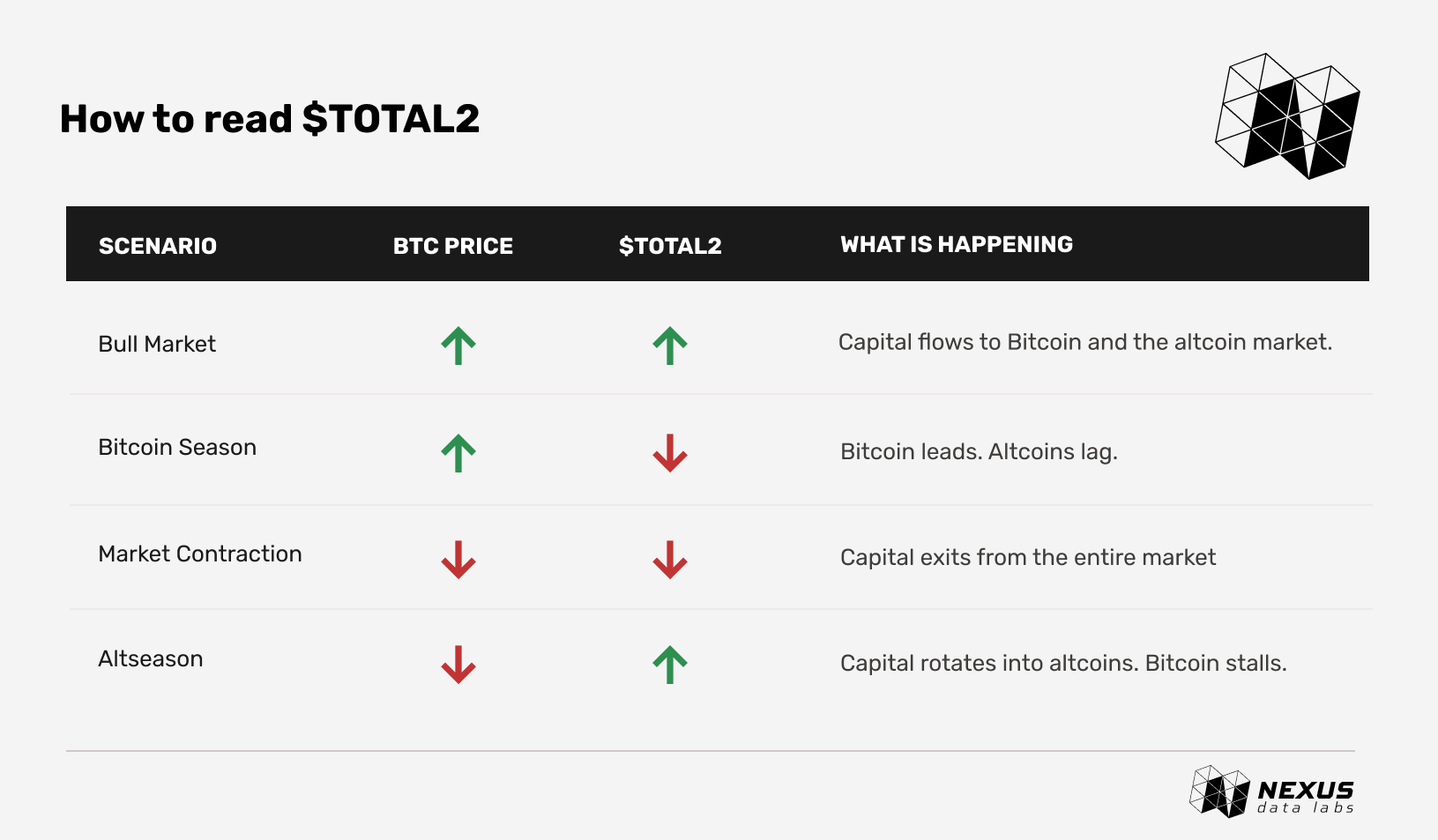
TOTAL2 is often paired with Bitcoin's price to understand where capital is flowing across the crypto market.
5. Trading the TOTAL2 Index
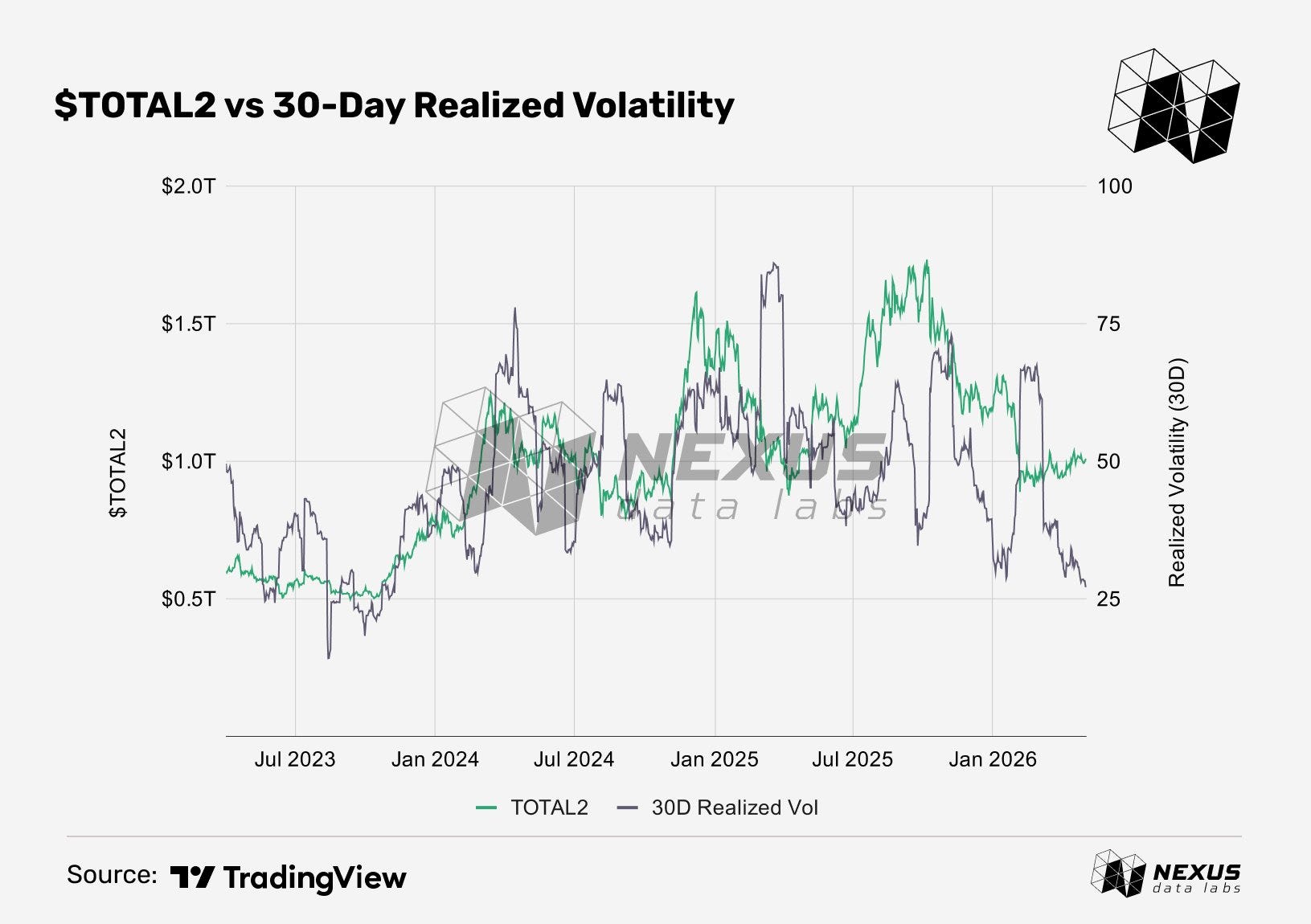
TOTAL2 gives traders a way to express a directional view on the entire altcoin market without assembling individual positions. The strategies below are setups commonly used to trade broad altcoin exposure. They are included here for educational purposes only. None of this is financial advice. Always do your own research before making any trading decisions.
Altseason Positioning
TOTAL2 tends to expand most aggressively when capital rotates broadly out of Bitcoin and into the altcoin market. Historically, this rotation follows a period of Bitcoin strength, where BTC Dominance peaks and begins to roll over, signaling that capital is starting to move down the risk curve.
How traders approach it: Monitor BTC Dominance for signs of a peak and rollover. When dominance begins declining from an extended high, go long TOTAL2 as the rotation signal confirms. Reduce exposure or exit when BTC Dominance starts recovering.
Relative Strength: TOTAL2/BTC Ratio
The TOTAL2/BTC ratio strips out the overall direction of the crypto market and isolates one question: is the broader altcoin market gaining or losing ground against Bitcoin? When the ratio breaks out of a sustained base, capital is rotating into altcoins. When it breaks down, altcoins are losing ground relative to Bitcoin.
How traders approach it: Watch the TOTAL2/BTC ratio chart. When the ratio starts climbing after a long flat period, capital is rotating into the broader altcoin market. Go long TOTAL2. When the ratio starts dropping after a sustained uptrend, altcoins are losing ground. Short TOTAL2 or reduce exposure.
6. Trading the TOTAL2 Index Onchain
Historically, expressing a view on the broader altcoin market meant assembling a portfolio of individual tokens, managing different risk profiles, and constantly rebalancing as narratives shifted. The position rarely reflected the original thesis cleanly.
Paragon (@tradeparagon) addresses this directly. It offers a TOTAL2 perpetual contract on Hyperliquid, giving traders direct exposure to the entire altcoin market excluding Bitcoin through a single position.
Beyond TOTAL2, Paragon also lists BTC.D, which measures Bitcoin’s share of the total crypto market, and OTHERS, which tracks the long tail of the market excluding the top 10. Together, the three indices cover the major segments of crypto market structure.
Learn more at Paragon.
Disclaimer
This article was produced in partnership with Paragon. The content is for informational and educational purposes only and does not constitute financial, investment, or trading advice. Nothing in this article should be relied on as a recommendation to buy, sell, or hold any digital asset. Do your own research before making any trading decisions.